You refill the bowl in the morning. By evening it is empty again, and you catch yourself wondering why your cat is drinking so much water all of a sudden. One week they barely touched it. This week you are on refill duty twice a day. Every cat owner I know has stood at the sink having exactly this thought. My own wake up call came from the litter box rather than the bowl: clumps twice their usual size, days before I connected it to the water dish.
Sometimes the answer is gloriously boring: a heatwave, a new bag of kibble, a week of wild midnight zoomies. But cats are creatures of steady habits, and a lasting change in thirst is one of the earliest whispers that something medical may be stirring, often before any other symptom shows. This guide will help you tell the boring reasons from the ones that need a vet, and show you how to track, respond, and keep your cat hydrated either way.
How much water should a cat drink, anyway?
Healthy adult cats generally take in 3.5 to 4.5 ounces of water per 5 pounds of body weight each day. For a typical ten pound cat, that works out at roughly one cup every 24 hours. Treat that as a centre line, not a rule, because diet, climate, activity, and age all shift it. Descended from desert animals, cats hide thirst remarkably well: some sip daintily and stay perfectly healthy, others visit the bowl a dozen times a day.
Diet swings the number most. A cat eating moisture rich wet food drinks noticeably less, because canned meals arrive mostly made of water. A cat on kibble drinks more to make up the missing moisture, which is one reason many owners mix in wet meals (if your senior eats canned food, my review of whether canned Friskies suits senior cats may help you choose). Dry winter heating and hot summers pull extra moisture out too, and young athletes outdrink sleepy seniors. Judge your cat against their own history, not against a stranger’s cat.
For a rough sense of where your cat sits, this table sketches typical daily totals by age and diet:

| Cat type | Rough daily intake |
| Kitten | 5 to 7 ounces |
| Adult cat | 7 to 9 ounces |
| Senior indoor cat | 8 to 12 ounces |
| Cats eating dry food | Higher intake than average |
| Cats eating wet food | Lower intake than average |
Start with the innocent explanations
Before worrying, run through the everyday causes, because they explain most thirsty weeks. A switch from canned food to kibble is the classic: within days of the changeover, the bowl starts emptying faster as your cat replaces the lost food moisture. Anyone who has changed diets and panicked three days later has met this one. Real life example: you bring home kibble on Monday because the shop ran out of the usual cans, and by Thursday the bowl needs daily refills while you search symptoms at midnight. That is just moisture maths, and it settles into a new normal within a couple of weeks.
Activity and weather come next. A cat that spends evenings climbing towers and ambushing toys drinks more afterwards, just like you after a workout. Warm rooms, dry air, and sunny window naps all increase losses, and summer drinking climbs across the board (heat changes sleep too, as I explain in whether cats sleep more in summer). Stress also moves the needle in both directions: a house move, a new pet, building noise, or a shuffled routine can send one cat to the bowl for comfort and another away from it entirely.
Then there is the fussiness factor. Many cats distrust still water and genuinely prefer it moving, which is why fountains, dripping taps, and freshly poured bowls get so much attention. A cat that “suddenly drinks more” after you buy a fountain has usually just been waiting for water worth drinking. Age adds its own slow drift upward, and gradual change in an older cat is normal. Sudden, dramatic jumps are what deserve a closer look.
How to measure what they actually drink
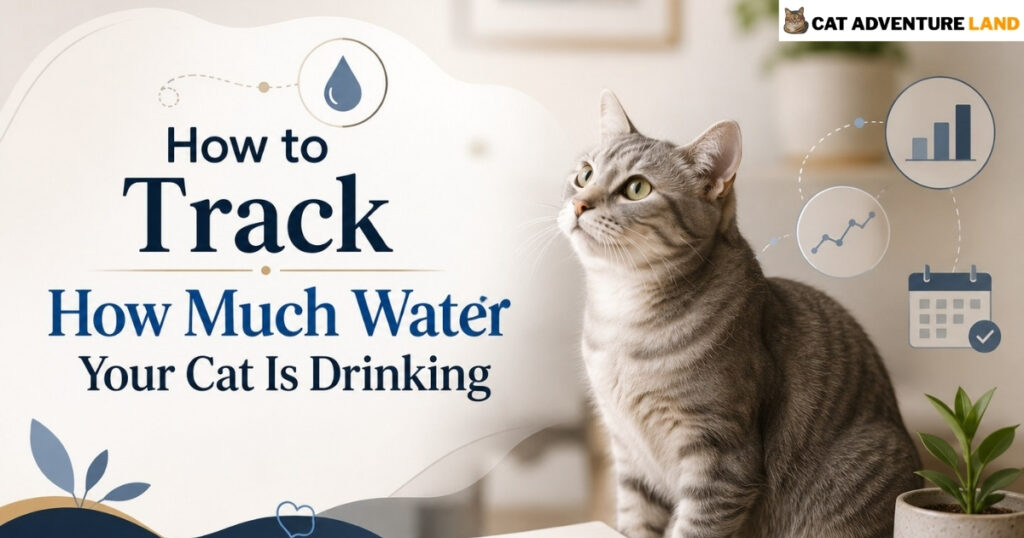
Guessing is unreliable, so measure for a week. Each morning, fill the bowl with a known amount and note what remains the next morning. That rough daily figure, tracked across days, reveals patterns no single glance can. In multi pet homes, measured bowls or smart fountains separate one cat’s habits from another’s, and some owners aim a small camera at the feeding station to log visit frequency. Slightly obsessive, completely effective.
Here is the trick experienced owners swear by: read the litter box, not just the bowl. Bigger urine clumps, heavier litter, and more frequent scooping often flag rising intake before you ever notice the drinking itself. Many owners discover the whole issue backwards, realising something changed only because the litter started running out faster. Pair that with a pocket journal of thirst, appetite, urination, vomiting, and energy, and slow developing problems show their shape weeks earlier. One owner I know caught her cat’s early kidney disease exactly this way: three weeks of slightly bigger clumps in her notes, flagged at a routine checkup, confirmed with one blood test. The journal did what memory never could.
| Sign to monitor | Possible meaning |
| Bowl empties faster | Rising thirst |
| Larger urine clumps | Rising urination |
| Frequent box visits | Possible urinary trouble |
| Drinking from taps | Seeking fresher water |
| Sudden thirst spike | Possible medical cause |
When thirst means the body is struggling
Healthy kidneys, hormones, and blood sugar systems hold fluid balance steady. When one of those systems falters, the body leaks extra fluid and thirst rises to compensate. The cruel part is the timeline: diseases of thirst creep in slowly, and cats keep acting normal until illness is well advanced. Thirst plus vomiting, fatigue, appetite loss, or heavier urination is the combination that should move you from watching to booking. Think of rising thirst as a dashboard light. It does not name the fault, but it always means look under the hood.
Kidneys: the most common culprit in older cats
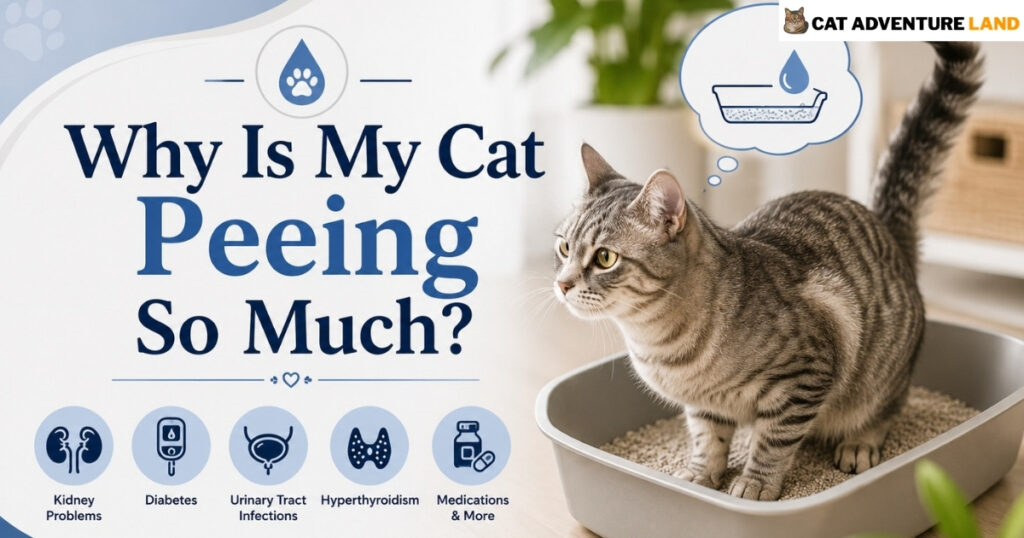
Aging kidneys filter waste less efficiently, letting water escape into urine instead of staying in the body. The result is a cat that pees more, drinks more to catch up, and slowly slides toward dehydration. Kidney disease touches huge numbers of senior cats and typically advances silently for months, which is why it so often looks sudden when it was anything but. The classic owner story goes like this: the litter gets heavier for a month, the cat drinks a little more each week, and everyone adjusts without noticing. Then a checkup for something unrelated reveals the numbers have been sliding all along.
Watch for the supporting cast: bad breath, a dulling coat, muscle wasting and weight loss, withdrawal, extra sleep, and shifting appetite (kidney care is a big chapter of later life care, alongside everything in how long cats live and how to help them age well). The hopeful news is that early screening with blood tests and a urine sample catches trouble while treatment can still slow it dramatically. Caught early, this is a managed condition. Caught late, it is a crisis.
| Common signs of kidney disease |
| Increased thirst |
| Larger urine clumps |
| Vomiting |
| Weight loss |
| Bad breath |
| Poor appetite |
| Weakness |
Thyroid and liver: the engine running too hot
Hyperthyroidism means the thyroid floods the body with hormone, and everything speeds up. Affected cats often eat ravenously yet melt away, drink more as their overworked bodies demand fluid, and grow restless, vocal, or strangely hyperactive, sometimes pacing and crying at night when the house is quiet. Liver disease travels a different road to the same symptom, sometimes adding yellowish eyes, nausea, vomiting, and fading appetite. Both cluster in middle aged and senior cats, and because their symptoms mimic half the illnesses in this guide, vets usually confirm with lab work and imaging rather than guesswork. Owners often describe thyroid cats as suddenly young again: racing about at midnight, chatting to empty rooms, demolishing dinner. It looks like a burst of health. Paired with weight loss and thirst, it is the opposite, and it is worth a blood panel.
Diabetes: thirst with a sweet cause
Feline diabetes has risen alongside indoor life: extra weight, little exercise, and carbohydrate heavy diets all push risk upward. When insulin runs short, blood sugar climbs and the kidneys flush the excess out in urine, dragging water with it. That is why many owners spot frequent urination first and only later connect it to the emptying bowl. The fuller picture adds constant hunger with simultaneous weight loss, weakening hind legs, dull fur, tiredness, and a scruffy, unkempt coat. Picture both bowls emptying faster at once: food vanishing yet ribs showing, water vanishing yet litter swelling. That double hunger, for food and water together, is the pattern that most often sends owners to the vet.
Here is the encouraging part owners rarely hear: early diagnosed cats do genuinely well, and some even enter remission with insulin therapy, weight management, and diet changes. Diabetes caught in the thirsty stage is a very different disease from diabetes caught in the collapsed stage. The bowl is giving you a head start. Take it.
| Common cat diabetes symptoms |
| Excessive thirst |
| Frequent urination |
| Sudden weight loss |
| Increased hunger |
| Weak back legs |
| Lethargy |
Urinary infections: painful, urgent, and worse in males
A urinary tract infection makes every visit to the box miserable: repeated trips, tiny outputs, crying, straining, and frantic licking afterwards. Thirst rises as the body tries to flush out bacteria and inflammation, and stones or crystals can join the picture. A typical scene: your cat trots to the box, strains, produces almost nothing, cries, then tries again ten minutes later. Repeat that loop and you are watching pain in real time, so do not wait for it to pass. Then comes the sentence every cat owner must memorise: a blocked male cat can die within hours. Any cat straining repeatedly with little or nothing to show for it is an emergency, not a wait until morning situation. Infections left alone escalate with frightening speed.
Medications that make them thirsty
Always check the prescription bottle. Steroids, heart drugs, seizure medications, and some pain treatments commonly shift fluid balance, and a cat parked at the bowl a week after starting a new drug is usually just experiencing side effects. This flavor of thirst typically settles when treatment ends or the dose is adjusted. Two rules stand: severe dehydration, vomiting, weakness, or major behaviour changes on medication are never “just side effects”, and never stop a prescribed drug suddenly without your vet’s direction. If the timing lines up neatly with a new prescription, mention it at the next checkup rather than worrying in silence. Vets adjust doses around side effects every day.
Why the peeing explodes alongside the drinking
Thirst and urination are two ends of one pipe. Extra fluid in gets processed into extra fluid out, which is why heavier drinking and heavier litter so faithfully arrive together. Kidney disease, diabetes, and hormonal disorders all break the body’s water conservation in ways that produce strikingly large urine volumes. Oversized clumps are routinely the first thing owners notice, occasionally joined by accidents outside the box when urgency or discomfort beats litter box manners.
One myth to bury: persistent increases are never “just old age”. Ageing changes pace gradually. A litter box that suddenly needs twice the scooping is reporting something, and the report deserves reading. I have heard the old age dismissal from owners who later wished they had acted months earlier. Ageing slows cats down. It does not double urine output.
Red flags: when to call the vet now
Not every thirsty cat is an emergency. A hot week or a playful spell explains plenty, and those spikes fade on their own. But constant, unquenchable thirst lasting days needs professional eyes, and certain companions upgrade it to urgent: vomiting, diarrhoea, weakness, appetite loss, rapid weight loss, or breathing changes. Difficulty urinating skips the queue entirely and goes straight to emergency, and male cats with suspected blockages are racing the clock toward kidney failure, bladder rupture, or toxic buildup. Trust a sudden gut feeling here. Some of the gravest warnings in feline medicine begin as nothing more than a bowl emptying faster, a pattern PetMD’s drinking lots of water symptom guide walks through in clinical detail.
What the vet will actually do
Expect detective work, starting with a full exam and a long conversation about food, medications, activity, bathroom habits, and exactly when the drinking changed. Then comes the core toolkit: blood tests and a urine sample mapping organ function, hydration, infection, and blood sugar across kidneys, liver, thyroid, and pancreas. If the picture stays unclear, ultrasound or X-rays examine the organs directly, blood pressure readings reveal strain on kidneys and heart, and suspected renal disease earns repeat testing over time to track direction and treatment response.
| Diagnostic test | What it reveals |
| Blood tests | Overall organ health |
| Urinalysis | Infection or diabetes clues |
| Ultrasound | Internal organ detail |
| Blood pressure test | Strain on kidneys and heart |
| Thyroid testing | Hyperthyroidism detection |
Treatment in plain terms
Everything hinges on the diagnosis, which is why testing comes before treating. Kidney disease usually means hydration support, prescription food, phosphorus control, and steady monitoring, with moisture rich meals doing quiet heavy lifting against dehydration. Diabetes pairs daily insulin with careful diet management, and early starters respond best. Urinary infections typically yield to antibiotics plus stress reduction and extra fluids. Thyroid disease answers to medication or radioactive iodine therapy that resets hormone output. Behind every case sits a plan tuned to severity, age, lifestyle, and the whole cat, not just the thirst. None of these plans works from the clinic alone. Your part is the daily noticing: appetite, weight, water, litter, energy. Owners who report small shifts early give vets room to adjust before small shifts become setbacks.
Helping them drink better at home
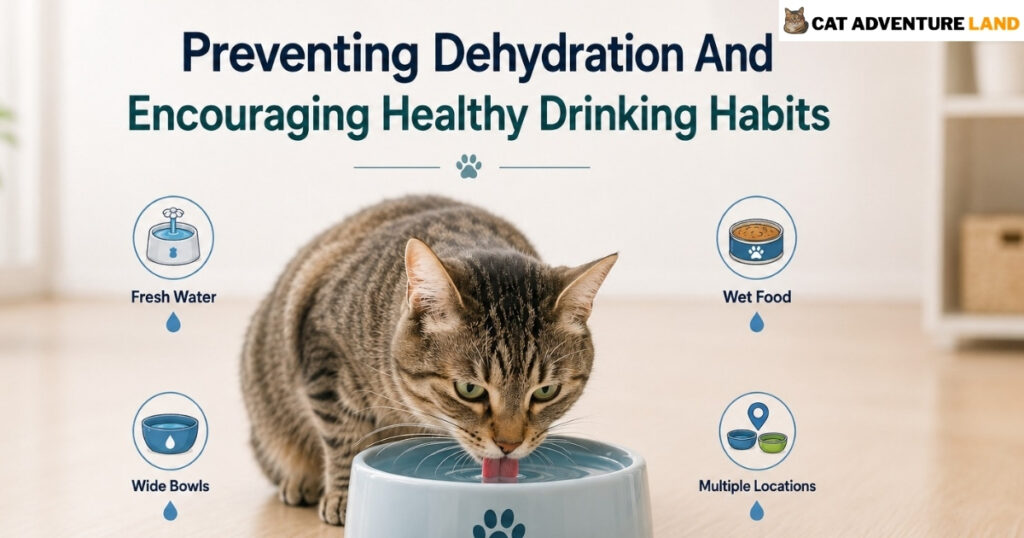
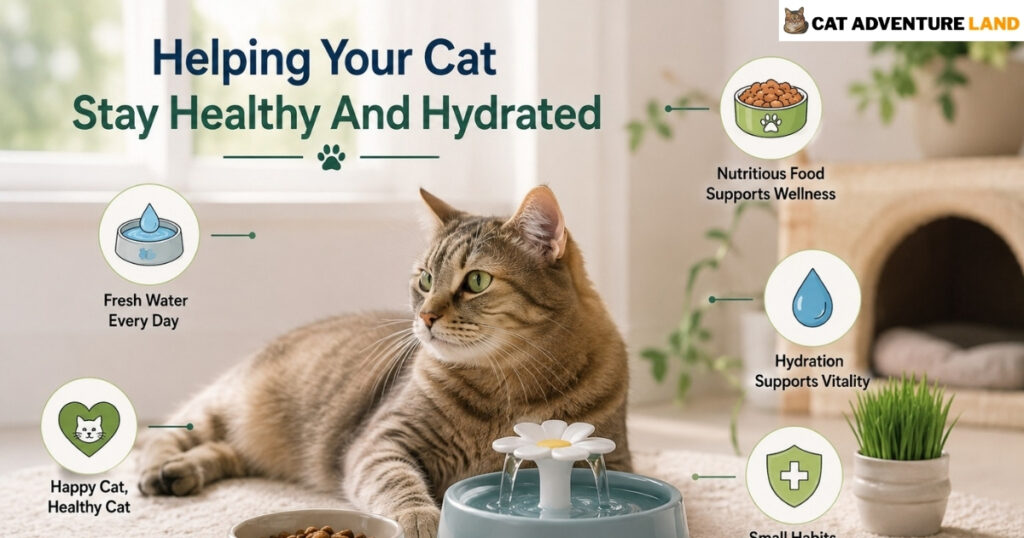
Whatever the vet finds, home setup still matters enormously. Fountains win over most cats because moving water reads as fresh and clean. Stainless steel bowls stay sweeter than plastic, which can harbour odours and bacteria. Wet food hydrates from the inside, so kibble devotees do well with canned meals folded in gradually. Scatter several water stations through the house, keep feeding corners calm and quiet for nervous drinkers, and remember the stakes: slow, chronic under drinking silently burdens organs for years before anyone notices.
Times when extra thirst is no big deal
For balance: plenty of thirsty spells are harmless. Heatwaves, active weeks, dry indoor air, an accidental salty treat raid, and nursing mothers with kittens to hydrate all raise intake legitimately. Fresh kibble converts stay thirstier for weeks while their bodies adjust. Judge the pattern across days, not the single dramatic afternoon, and expect environmental spikes to settle as conditions normalise. Keep half an eye on them even so. Harmless until proven otherwise is a fine policy as long as the watching actually happens.
Living well with a chronic condition
If testing ends with a long term diagnosis, take heart: routine beats dread. Owners who track appetite, weight, energy, and litter output daily catch downturns while they are still small, and regular checkups let vets tune treatment before slides become falls. The payoff is real. Countless cats with kidney disease, diabetes, or thyroid conditions live comfortable, happy years under steady care and a calm household rhythm. Chronic sounds scary. Managed feels ordinary.
FAQs about cats drinking lots of water
Should I be concerned if my cat drinks a lot of water?
Short spikes after heat, play, or diet changes are usually fine. Lasting thirst, especially with weakness, vomiting, or dehydration signs, earns a vet visit. Duration plus company is the formula: the longer it lasts and the more symptoms join it, the sooner you should call.
What counts as excessive thirst in cats?
There is no universal red line, because normal varies by cat. The practical definition is drinking clearly more than your cat’s own usual amount, sustained over days, particularly with increased urination. Your cat’s history is the reference range that matters.
How many times a day should my cat drink water?
Most cats visit the bowl several times daily, some in many tiny sips and some in fewer long drinks. Count patterns, not visits: a sudden, sustained jump in frequency is the signal worth tracking and mentioning to your vet.
What are the signs of dehydration in cats?
Dry gums, weakness, sunken eyes, panting, skin that stays tented when pinched, and flat fatigue. Severe dehydration can turn dangerous fast, so do not wait out obvious cases. Call your vet the same day.
The bowl is talking. Listen early.
Cats rarely announce illness. They edit their routines and hope you notice. A thirst that outgrows its innocent explanations is one of the clearest edits they make, and catching it early hands your vet the easiest version of every disease in this guide.
So measure the bowl, read the litter, note the appetite and energy, and act on patterns instead of panic. Whether the ending is a new fountain or a new treatment plan, attention is what turns a warning whisper into a happy outcome. The cats who do best are rarely the luckiest. They are the watched.

Cat Adventure Land is created for cat lovers who want simple guidance that actually helps. Here you get friendly advice on daily cat care feeding grooming training and overall wellbeing. Every article is written with a focus on real life situations so you can understand your cat better and give them a healthier happier life. Our goal is to make cat care easy for everyone whether you are a new owner or caring for a senior cat.