
Nothing rearranges a household like a new kitten: tiny teeth, enormous appetite, and a feeding learning curve that starts on day one. Get the early diet right and you build bones, immunity, and digestion that last a lifetime. Get it wrong and even small mistakes can echo through development, which is why the dry food question deserves a careful answer rather than a guess.
This guide covers the full journey: when dry food can safely enter the picture, how the week by week timeline works, the gentle way to transition, how much to serve, and the mistakes that trip up most first time owners. Follow it and the bowl becomes the easiest part of kittenhood. I have raised enough kittens to know the pattern by heart: the owners who measure, schedule, and transition slowly enjoy calm eaters, while the guessers collect vet bills and midnight worry.
The short answer: 6 to 8 weeks, softened first
Most kittens can meet dry food at 6 to 8 weeks old, but hard crunchy kibble on day one is a mistake. Teeth are still soft and the digestive system is mid construction, so the safe entry is softened kibble: dry food soaked in warm water or kitten formula until it turns spoonable. Vets push this slow start because it sidesteps the classic early errors of diarrhoea, bloating, flat refusal, and the occasional choking scare.
Rushing the calendar is the single costliest error in this guide. A kitten pushed onto hard food too early does not power through. They bloat, scour, or simply walk away from the bowl, and every missed meal lands during the fastest growth of their life. Balanced nutrition at the right age beats bravado every time. When friends ask me for the one rule of kitten feeding, this is it: match the food to the week, not to your impatience.
The week-by-week timeline
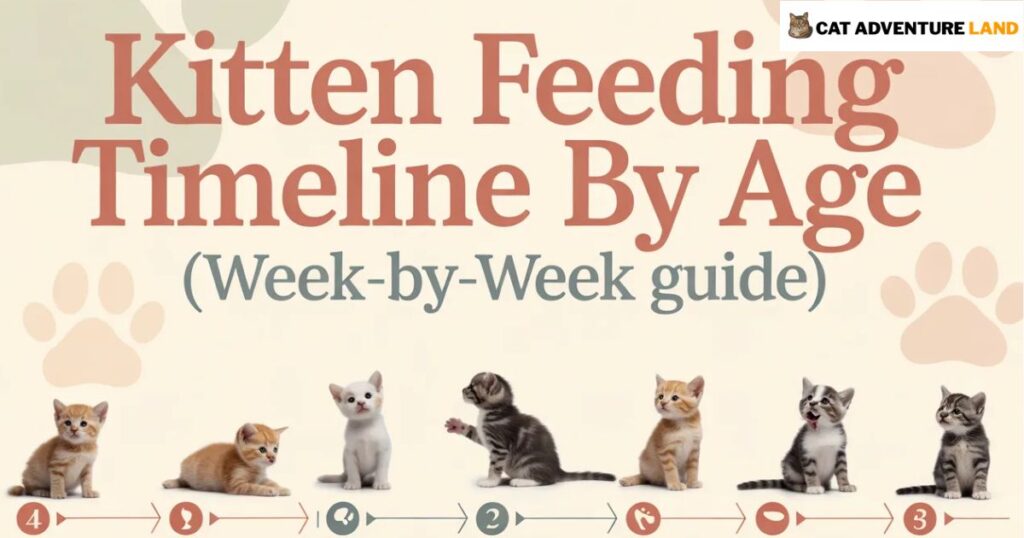
Each stage feeds differently, and mistimed jumps slow growth. Think of it like school grades. Skipping ahead feels efficient until the gaps show up months later in dull coats, soft stools, and uneven weight gain. Milk owns the opening weeks, curiosity about real food dawns around week four, soft solids get tasted by week six, and dry food joins as a softened guest near week eight. Pin this table to the fridge.
| Age | Food type | Feeding style |
| 0 to 3 weeks | Mother’s milk or formula | Full dependency |
| 4 to 5 weeks | Wet food or gruel | Early weaning |
| 6 to 8 weeks | Softened dry plus wet food | Transition stage |
| 8 to 12 weeks | Mostly dry food | Gradual shift |
| 3 to 6 months | Dry food | Regular feeding routine |
| 6 to 12 months | Balanced kitten diet | Growth stabilisation |
The seven-day soft kibble switch
Transitions fail on speed, not on food. Start with kibble soaked in warm water, rested a few minutes until soft, and served in small portions. Over five to seven days, drain off progressively more water until your kitten crunches plain kibble happily. Resistance in the first days is normal kitten conservatism, not a verdict on the food.
For dramatic refusers, stir a spoonful of wet food through the softened mix so the familiar smell carries the new texture. A pinch of crumbled treat dust from the best cat treats for training works the same magic as a fragrant topper. Small portions, warm serving, zero pressure: that trio converts nearly every holdout within the week. One of my fosters refused every texture for three days straight, then inhaled the same mix on day four as if it had always been her favourite. Kittens run on their own clock.
Picking the right bag
Timing means little if the food itself is wrong. Kittens need formulas engineered for growth: high protein, real meat first on the label, no corn fillers or artificial additives riding along. That nutrient density builds brains, muscles, and immune defences simultaneously, which adult maintenance food simply cannot match. This is also why the kitten label matters more than the brand name: formulation beats marketing, always.
Then handle the moisture gap honestly. Kibble is nearly dry by design, so a dry fed kitten must drink diligently to compensate. Keep fresh water in multiple spots, consider a fountain for reluctant drinkers, and learn what healthy intake looks like in why cats drink a lot of water. Hydration is not a side note in dry feeding. It is half the plan.
Wet versus dry, honestly settled
Wet food brings moisture, easy chewing, and gentle digestion. Dry food brings convenience, routine friendly serving, and crunch that exercises teeth. Neither wins outright, and the experienced owner’s answer is both: wet meals carry hydration while dry food anchors the daily structure. If you want the wet side chosen for you, my roundup of the best wet food for kittens in 2026 ranks the cans worth buying.
Can a kitten live on dry food alone?
Yes, provided the food is complete and balanced for growth and the kitten actually drinks. That second condition is where dry only diets wobble, because some kittens sip too little and slide toward constipation or dehydration without obvious drama. Running dry only means committing to surveillance: water intake, stool quality, and eating enthusiasm, every day. At the first sign of dry stools or low thirst, wet food stops being optional. Keep a simple log for the first month of dry only feeding: water level morning and night, plus stool notes. Data beats vibes when health is on the line. Most vets still nudge owners toward mixed feeding for digestion insurance alone.
How much, and the chart to follow
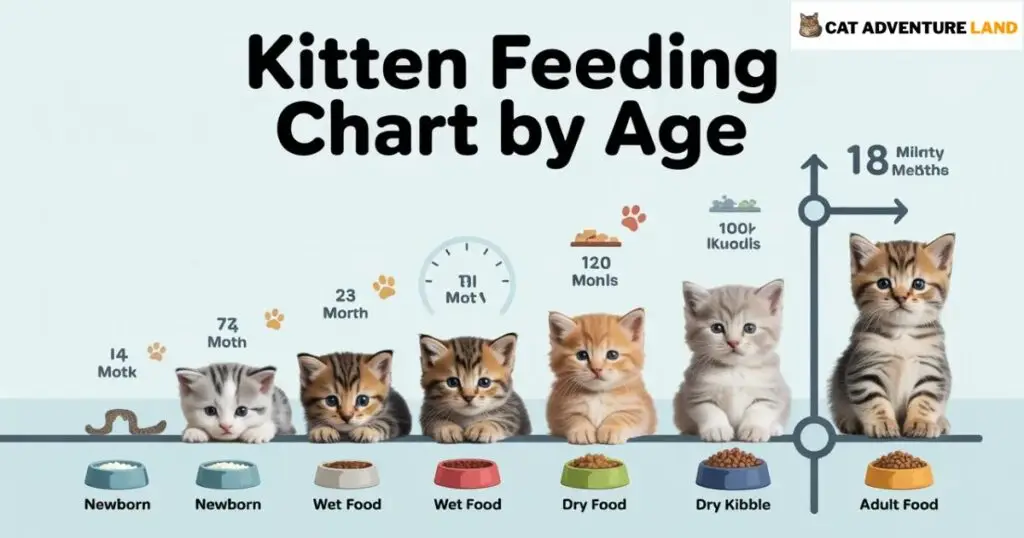
Portions hinge on age, weight, activity, and the specific food’s calorie density, so the bag’s guidelines are your starting line and your kitten’s body condition is the finish judge. Small frequent meals suit tiny stomachs far better than one daily mountain. Overfeeding fattens kittens into unhealthy weight curves while underfeeding brakes development, and neither error announces itself loudly.
| Age | Food type | Meals per day |
| 3 to 4 weeks | Wet food or formula | 5 to 6 meals |
| 4 to 6 weeks | Soft wet food | 4 to 5 meals |
| 6 to 8 weeks | Wet plus softened dry | 3 to 4 meals |
| 2 to 6 months | Dry plus wet mix | 3 meals |
| 6 to 12 months | Mostly dry food | 2 to 3 meals |
| 12+ months | Adult cat food | 2 meals |
Build the day around rhythm. Three to four measured meals carry kittens to six months, then two daily meals take over into adulthood. Measured portions beat free feeding for weight control and let you notice appetite dips early, which is often the first sign something is off. Manufacturer charts like the Purina kitten feeding chart give brand specific numbers worth bookmarking alongside this guide.
Signs your kitten is ready
Kittens advertise readiness clearly: enthusiastic chewing on everything, fascination with your food and theirs, and teeth visibly sturdy enough for the job. But calendars are averages and kittens are individuals. A kitten that struggles to crunch or shows digestive protest after tasting dry food is voting to wait, and waiting a week costs nothing. Let the kitten, not the chart, cast the deciding vote. Littermates on identical schedules routinely differ by a week or more, and the runt who needs extra days on soft food today becomes the chonkiest adult tomorrow.
Mistakes that cost growth
Three errors account for most feeding trouble. Starting dry food too early punishes immature digestion. Forgetting water turns a dry diet into a dehydration trap with urinary consequences. Overfeeding, usually from love plus free poured bowls, quietly builds fat that burdens growing joints. All three share one cure: measure the food, refresh the water, watch the kitten, and adjust weekly instead of yearly.
Graduation to adult food at twelve months
Growth tapers around the first birthday, and calorie dense kitten formulas become surplus rather than support. Switch gradually by blending adult food into kitten food over seven to ten days, watching stools and enthusiasm throughout. A rushed graduation undoes months of careful feeding in a single gassy week, so let the blend do its slow work. Mark the switch on a calendar and resist the urge to shortcut day eight because the bag is nearly empty.
FAQs about kittens and dry food
1. When can kittens eat dry food safely?
Around 6 to 8 weeks, always softened with warm water or formula at first. Hard kibble waits until chewing and digestion prove ready, usually a week or two later.
2. Can a 4-week-old kitten eat dry food?
No. At four weeks the menu is milk or formula plus first tastes of soft wet food. Teeth and digestion need another fortnight minimum before dry food enters the conversation.
3. Should I soak dry food for kittens?
Yes, during the introduction phase. Soaking softens texture for toothless era chewing and removes choking risk. Taper the water over five to seven days as crunching confidence grows.
4. How often should I feed a kitten dry food?
Three to four small meals daily until six months, then two to three, settling at two in adulthood. Match frequency to age and energy, and keep portions measured rather than free poured.
5. Is dry food enough for a kitten’s growth?
High quality kitten kibble can carry growth alone if water intake stays strong. Adding wet food improves hydration and nutritional breadth, which is why mixed feeding remains the default recommendation.
The bowl builds the cat
Feeding a kitten is foundation work disguised as chores. Time the dry food debut, soften the landing, transition over days not hours, and keep water as sacred as food. Do that consistently and the payoff compounds: steady growth, calm digestion, and a cat whose adult health was poured one measured meal at a time. Future you, holding a glossy healthy adult cat, will be glad present you bothered.

Cat Adventure Land is created for cat lovers who want simple guidance that actually helps. Here you get friendly advice on daily cat care feeding grooming training and overall wellbeing. Every article is written with a focus on real life situations so you can understand your cat better and give them a healthier happier life. Our goal is to make cat care easy for everyone whether you are a new owner or caring for a senior cat.