
Fur on the couch, fur on your black trousers, fur tumbleweeds drifting down the hallway like the house has its own weather system. If you keep asking why your cat is shedding so much, here is the balanced truth: all cats shed, most shedding is healthy, but sudden or extreme shedding is one of the clearest ways your cat tells you something changed.
American homes see the pattern swing with spring and fall, while indoor cats often shed all year as artificial light scrambles their coat clock. This guide explains the normal machinery, the seasonal rhythm, the seven forces that turn normal shedding heavy, and the practical routine that keeps both coat and couch under control. I have lived with serial shedders for years, and the difference between a managed coat and a miserable one is almost entirely routine.
Why cats shed at all
Shedding is renewal, not malfunction. Old hairs fall, fresh hairs rise from the follicles, and the coat stays ventilated, temperature controlled, and free of trapped dirt and oils. Daily self grooming loosens the retirees along the way. Breed sets the volume dial: a Persian or Maine Coon will always outproduce a shorthair, and older cats shed more visibly as stiff joints make self cleaning harder and mats trap loose fur against the skin. My neighbour’s Ragdoll fills a brush in one sitting every April without anything being wrong, while my shorthair barely registers. Same biology, wildly different laundry.
The seasons run the coat
Most cats blow their coats hardest in spring and fall. Spring evicts the thick winter insulation ahead of the heat, while fall grows dense new fur for the cold months. Mark your calendar and you can practically set your watch by it: the spring blowout arrives within weeks of the daylight noticeably lengthening. Daylight drives the whole switch: shifting day length nudges melatonin and tells follicles when to release and when to grow. Indoor cats living under lamps and heating get scrambled signals all year, which is why apartment cats often shed steadily instead of seasonally. If your indoor cat drops the same steady confetti in January and July while the outdoor cat next door blows two dramatic coats a year, both are behaving exactly as their lighting dictates.
| Season | Coat change | Shedding level |
| Spring | Thick coat removal | High |
| Summer | Light fur maintenance | Moderate |
| Fall | Winter fur growth | High |
| Winter | Stable coat retention | Low |
Fur versus hair: the thirty second version
People mix the words constantly. Strictly speaking, fur grows in dense layers to a set length while hair grows longer on its own cycle, and most cats wear both: a soft undercoat for insulation plus tougher outer hairs that shed dirt and moisture. Double coated breeds drop dramatic handfuls of underfur at coat change time, which is exactly when their owners discover what heavy shedding really means. Brush a Husky style double coat in April and the pile on the floor genuinely startles first timers. That avalanche is a feature, not a fault.
Why so much, and why now?
Healthy shedding ventilates skin and clears damage. But the same machinery overreacts to trouble. Anxious or uncomfortable cats over groom and over lick, chewing their own coats into thin patches and sores. Poor food quality starves the coat of protein and omega fatty acids until fur turns dull and brittle. Chronic stress raises cortisol, weakens skin, and can spark nervous licking that strips whole areas. When owners ask why the shedding suddenly doubled, the answer usually sits in one of those three buckets: nerves, nutrition, or health. The nervous licking version is unmistakable once you have seen it: a cat working one flank or belly bald with obsessive evening sessions while the rest of the coat looks fine.
Normal shedding or a medical problem?
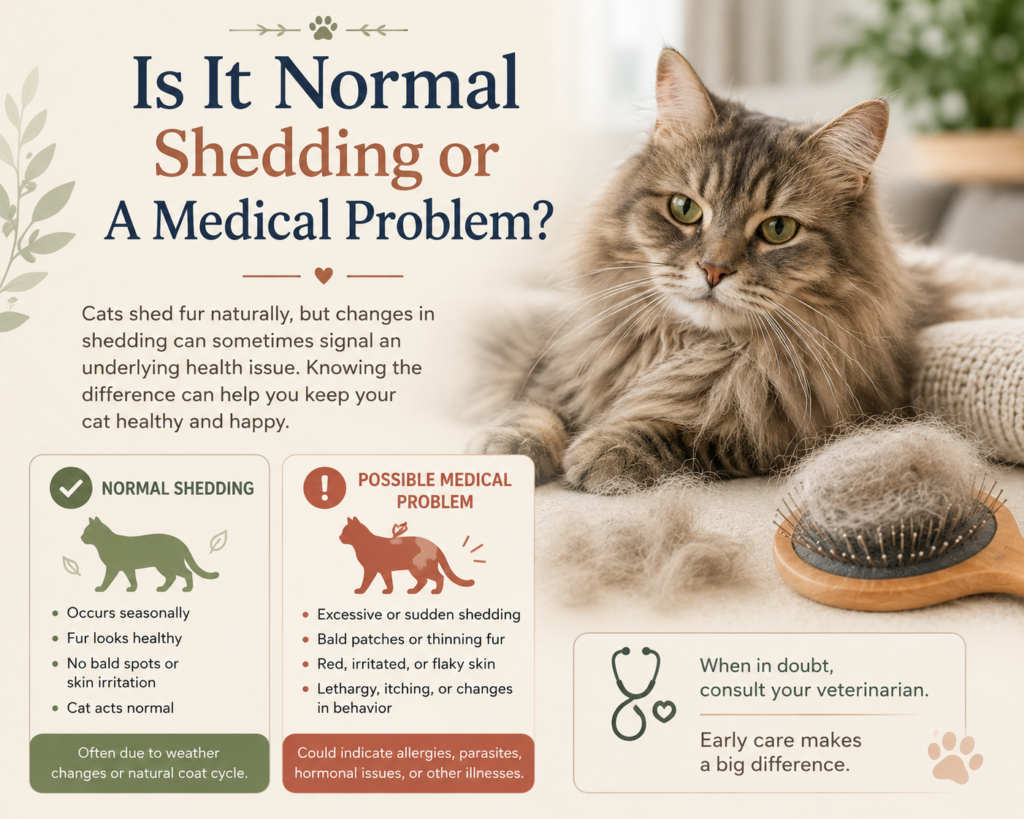
Normal shedding spreads evenly with smooth, calm skin underneath. Worry when the pattern breaks: bald spots, redness, swelling, relentless itching, or wounds. Allergies, parasites, and fungal infections attack coat quality fast, and sick cats often quit grooming, which makes everything look worse within days. Compare your cat against this table before deciding anything. A useful hands on check takes sixty seconds: part the fur in several spots and look at the skin. Smooth and pale with even coverage means relax. Redness, flakes, scabs, or patchy thin zones mean the vet question moves up the agenda.
| Normal shedding | Problem shedding |
| Even fur loss | Patchy fur loss |
| Smooth skin | Red or swollen skin |
| Mild brushing fallout | Large hair clumps |
| Seasonal coat change | Constant itching |
| No sores | Visible wounds |
The seven forces behind heavy shedding
1. The weather
Rising temperatures trigger undercoat release so cats avoid overheating, and outdoor cats swing harder than indoor ones. Apartment dwellers get the confusing version: heating plus lamps simulate endless shoulder seasons, stretching moderate shedding across all twelve months. If your indoor cat sheds the same in January and July, blame the thermostat more than the cat.
2. Stress
Travel, noise, new pets, long lonely days: tension hits fur through two channels at once, a stressed immune system plus compulsive chewing, licking, and scratching that shreds the skin barrier. The classic case is the post move shed, where a cat that barely moulted before suddenly coats every surface for a month. Calm the environment and the coat usually follows within weeks. Feliway style diffusers, covered hideaways, and protected nap zones sound like spa luxuries, but for a stressed shedder they are medicine that happens to plug into a wall.
3. The food bowl
Coats are built from animal protein, healthy fats, vitamins, and water, so filler heavy food shows up as dry skin, flakes, and dull breakable fur. Genuine protein deficiency can stall hair growth outright, while missing fatty acids leave coats rough and thin. Feeding well is the cheapest shedding fix there is. Owners typically see coat gloss return within a month of upgrading protein and fats, which makes food the fastest experiment you can run. If you share your home with an older cat, my notes on proper nutrition for senior cats dig into age appropriate choices.
4. Health problems
Skin infections, thyroid trouble, allergies, and hormonal disorders can all detonate shedding within weeks. Itching drives scratching, scratching damages fur, and chronic illness weakens the immune defences against bacteria, yeast, and mites. Any coat collapse paired with appetite, energy, or behaviour changes deserves lab work, not just a better brush. Thyroid and hormonal cases are especially sneaky: the fur thins for weeks while the cat acts mostly fine, until the bloodwork tells the real story.
5. The breed lottery
Persians and Ragdolls haul around enormous undercoats that empty spectacularly at season change and demand daily grooming as the price of admission. Shorthairs shed just as constantly with less drama per strand. Even hairless breeds need the routine: with no fur to absorb skin oils, they require regular wipedowns to stay comfortable.
6. The water bowl
Cats already drink less than dogs, so marginal hydration dries skin fast and turns fur brittle. Fountains plus wet food solve most of it: moving water tempts reluctant drinkers while canned meals hydrate from within. If your cat’s intake looks odd in either direction, read why cats drink a lot of water before assuming the coat issue stands alone.
7. Age
Senior cats groom less as arthritis stiffens the acrobatics, so loose fur accumulates and mats quietly underneath. Hormones shift, skin thins, and sensitivity to everything rises. Older cats are not higher maintenance out of spite. They are dealing with a body that cooperates less each year, a reality I explore in how long cats live and how ageing changes them.
Red flags and the vet line
Light daily fur on furniture is the price of admission, rising in spring and fall. Cross to the vet when shedding turns sudden, patchy, or painful: bald areas, redness, scabs, relentless scratching, or a skin barrier clearly failing. Clinics answer with skin scrapings, allergy workups, bloodwork, and parasite screens, and early treatment shortens every one of these stories.
Two culprits deserve their own warning. Fleas and mites irritate out of all proportion to their size: a minor flea presence can ignite allergic scratching that strips whole flanks, and infestations spread through a home with horrifying speed, so year round prevention beats emergency treatment every time. Fungal infections like ringworm draw unmistakable circular bald patches, while bacterial infections add swelling, odour, and pain. One caution from experience: ringworm spreads to humans with insulting ease, so glove up for handling and wash bedding hot until the vet gives the all clear. These need real veterinary treatment, not internet remedies, partly because several spread to humans and other pets while you experiment.
The management playbook
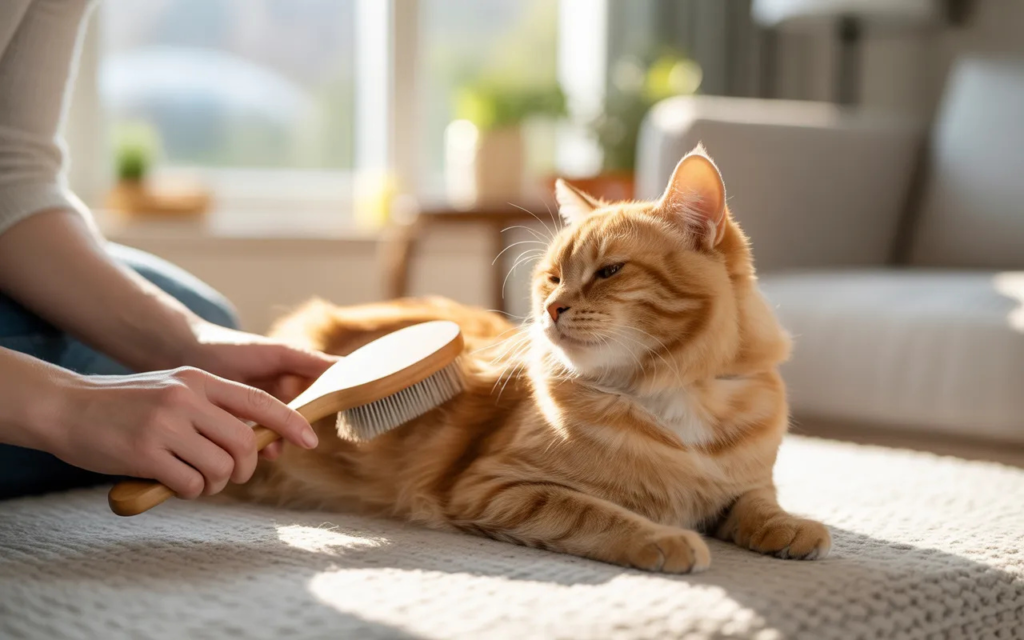
Daily grooming is the highest value habit in this entire guide. Brushing captures dead fur before it emigrates to the sofa, stimulates circulation, spreads protective skin oils, and turns you into an early warning system for wounds, lumps, and creepy crawlies. Longhairs need the ritual daily, shorthairs several times a week, and the bonus nobody mentions is hairballs: less swallowed fur means fewer midnight surprises on the rug. Most cats grow to love sessions that mimic the social grooming of colony life. Start with thirty second sessions paired with treats and quit while they are still enjoying it. Within a fortnight most cats hear the brush drawer and come running instead of running away. Technique guides like this brushing walkthrough from PawSwing demonstrate the strokes if you are starting from zero.
Support the brush with the other three pillars. Feed protein plus fatty acids, with fish oil style foods strengthening the skin barrier and moisture retention, because flaky dull coats almost always start in the bowl. Run parasite prevention all year, since indoor cats meet fleas via clothing and housemates, and modern preventatives stop inflammation before it starts. Keep the household calm and rhythmic: same feeding times, scratching posts, toys, and quiet sleeping corners lower the anxiety that drives stress shedding.
Winning the war on fur
Some fur will always escape, so arm the house. A vacuum with pet attachments handles carpets and upholstery, washable throws sacrifice themselves for the good sofa, and quick daily passes with rollers and rubber brushes stop buildup from becoming archaeology. Air purifiers cut airborne dander for sensitive noses. Consistency beats intensity: five minutes daily outperforms a monthly fur excavation. Keep a roller by the door you actually use and a rubber brush where the cat actually sleeps. Tools you can reach get used. Tools in the cupboard do not.
| Cleaning tool | Best use |
| Vacuum cleaner | Carpets and rugs |
| Lint roller | Clothing and fabric |
| Rubber brush | Furniture |
| Air purifier | Dander control |
| Microfiber cloth | Hard surfaces |
The calm coat mindset
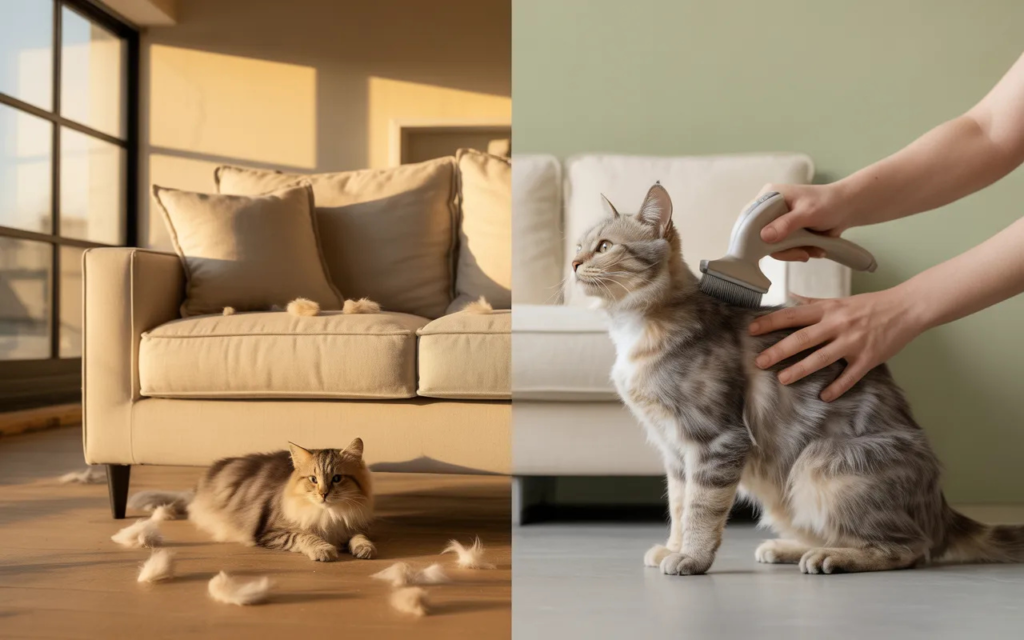
Successful shedding care stacks four small habits: grooming, nutrition, hydration, and emotional steadiness. None works alone and together they compound fast, which is why routine cats in calm homes so often carry the glossiest coats. Accept the one immutable law: shedding never stops completely because fur replacement is biology. Smart care simply shrinks the mess while the coat itself grows healthier, softer, and easier to live with.
FAQs about cat shedding
Why is my cat shedding so much all of a sudden?
Sudden surges usually trace to stress, parasites, a diet change, or brewing illness. Check the calendar for disruptions first, then the skin for redness and bald patches. Anything patchy, painful, or paired with behaviour changes earns a vet visit. Photograph the skin on day one so you can show the vet the progression even if the cat grooms the evidence away.
Is excessive shedding a sign of stress in cats?
Yes, often. Anxiety drives overgrooming, nervous licking, and hormone shifts that thin the coat. Moves, new pets, noise, and loneliness are the usual suspects, and the fur usually recovers once the cat feels safe again.
How often should I brush my shedding cat?
Shorthairs do well with two to three sessions a week, longhairs need daily attention, and heavy seasonal blows justify extra passes for any coat. During peak coat change, a quick daily pass for every breed keeps the migration to your furniture noticeably smaller. Regularity matters more than marathon sessions.
Does cat food affect shedding?
Enormously. Protein, fatty acids, and moisture build the coat from within, so cheap filler heavy food shows up as dull brittle fur within weeks. Upgrading the bowl is the fastest legitimate shedding fix available.
Can allergies make cats shed excessively?
Yes. Food and environmental allergies inflame skin, trigger scratching and overgrooming, and strip fur in the crossfire. If shedding comes with itching, redness, or digestive upset, ask your vet about allergy testing.
Shedding is normal. Suffering is not.
Seasons, indoor living, breed, and age set every cat’s baseline, and steady grooming plus genuine nutrition handle most of the rest. Treat sudden explosions, bald patches, and frantic itching as the alarms they are, because early treatment protects comfort and stops small skin trouble from becoming big skin trouble. A photo log of the skin, taken weekly, turns vague worry into evidence your vet can actually use.
Get the routine right and the reward is a soft glossy coat, a calmer cat, and a home where the fur stays at decoration level rather than weather system. Your vacuum will still know your cat exists. It just will not be working overtime anymore.

Cat Adventure Land is created for cat lovers who want simple guidance that actually helps. Here you get friendly advice on daily cat care feeding grooming training and overall wellbeing. Every article is written with a focus on real life situations so you can understand your cat better and give them a healthier happier life. Our goal is to make cat care easy for everyone whether you are a new owner or caring for a senior cat.