
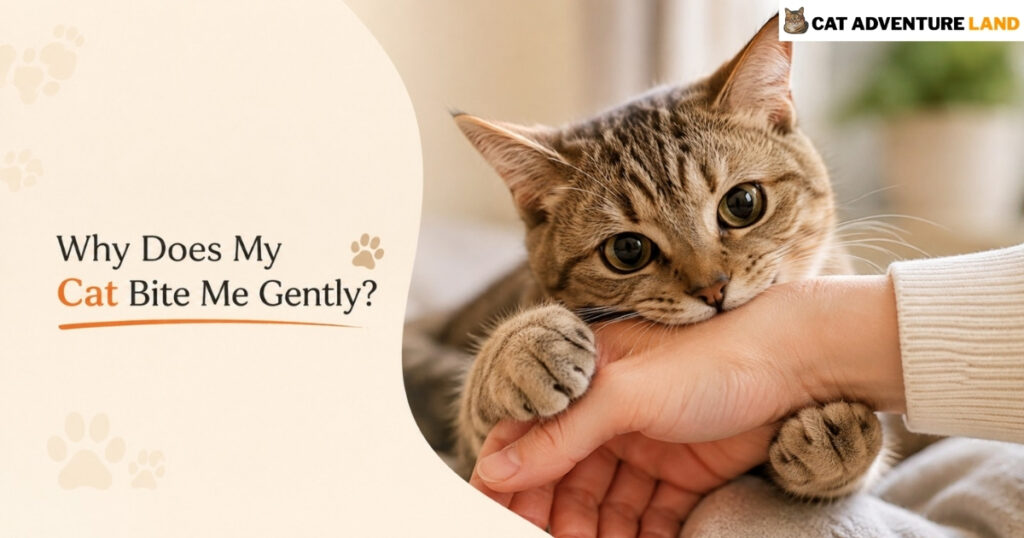
You are stroking your cat, everything is peaceful, and then they turn and close their teeth softly around your hand. No pain, no anger, just pressure. You freeze and think: why does my cat bite me gently? Is this love, a complaint, or the opening act of something worse?
After years of living with cats, I can tell you the answer is almost always communication. A soft bite is one of the few words in your cat’s vocabulary, and it carries several meanings depending on the moment. This guide translates each one, shows you how to read the seconds around the bite, and explains how to keep nibbles friendly without ever punishing your cat.
What a gentle bite actually is
Cats cannot talk, so they speak with bodies: posture, tail, voice, and touch. The gentle bite is part of that language. Unlike a real attack, it is controlled and quick, rarely breaks skin, and most owners describe it as a nibble or a press rather than a bite. The meaning hides in the context: a soft mouth during a purring cuddle says something entirely different from the same pressure during a tense petting session.
Nearly every gentle bite falls into one of six buckets: affection, play, overstimulation, attention seeking, stress, or discomfort. Work out which bucket you are looking at and the right response becomes obvious.
The love bite: affection with teeth

The most common gentle bite is pure fondness. Cats groom their trusted circle with tongues and teeth alike, so a cat that nibbles your fingers while purring on your lap is treating you like family. It often arrives with licking first, a sequence I unpack fully in why cats lick you and then bite you, and sometimes with rhythmic kneading paws too. If the paws join in, that behaviour has its own sweet explanation in why cats make biscuits on you.
You will recognise a love bite by the softness around it: purring continues, the body stays loose, eyes go slow and blinky, the tail rests calm, and your cat stays tucked close instead of leaving. Feline nutrition writers at Applaws describe this same gentle biting behaviour on Applaws as normal social bonding, which matches everything I have seen in real homes.
Play fighting with the wrong opponent
Your hand moves, so to a cat brain it is prey. Indoor cats carry the full hunting toolkit with nowhere to spend it, and kittens are still learning where the game ends and rudeness begins. The classic move is the grab: front paws wrap your hand, back feet bunny kick, teeth press in. It looks dramatic and feels mostly harmless, because it is practice, not violence.
Play biting blooms where energy has no outlet: excess zoomies, boredom, too few toys, too little interaction. The fix is boringly reliable. Retire hands from all rough games, run two proper wand toy sessions daily, scatter puzzle feeders and climbing towers, rotate toys so old ones feel new, and keep scratching posts where your cat actually hangs out. A played cat rarely auditions your fingers as prey.
The petting timer ran out
Many cats adore stroking right up until they do not. Sensitive nerve endings mean repeated touch can tip from lovely to too much with no visible checkpoint, and the soft bite is the polite announcement that the session is over. One moment melted and purring, the next moment teeth. Owners call it unpredictable, but the broadcast always precedes it.
Learn your cat’s tells and you will start ending sessions before teeth appear. The usual sequence runs: tail begins swishing, ears tilt back, back skin ripples, muscles tense under your hand, pupils widen, and the head swings toward your fingers. When you spot the early entries on that list, stop while you are ahead with one last chin scratch. Quitting early, repeatedly, is what stretches short fuses into longer ones.
“No reason” bites that always have one
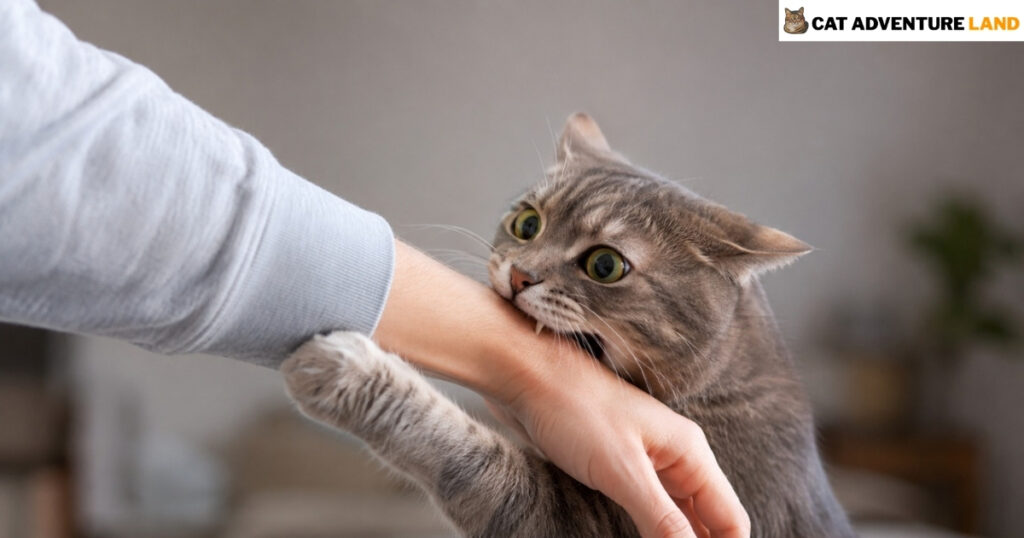
“She bit me for no reason” is the most common sentence in every cat forum, and it is almost never true. The trigger list is short: sudden overstimulation, a flash of fear or anxiety, a bid for attention, a burst of playfulness, frustration bubbling over, or redirected excitement. The redirected kind is my favourite example. Your cat watches a bird through the window, arousal spikes with nowhere to go, you touch their back at the wrong second, and your hand collects the energy the bird escaped.
It helps to translate the bite into words. Most say one of four things: stop touching me, play with me, pay attention to me, or give me space. Match your response to the sentence. Stop means stop. Play means fetch the wand toy. Attention means a brief fuss on your terms, not theirs. Space means let them leave with dignity. Cats whose messages get heard repeat them less.
Stress and nerves speaking through teeth
Not every soft bite is friendly. Anxious cats use gentle mouthing as an early warning flare, a step below hissing and swatting. House moves, loud building work, new pets, visiting relatives, shuffled schedules, and plain understimulation can all lower a cat’s tolerance until ordinary handling earns teeth.
Stress rarely travels alone, so look for the companions: frequent hiding, flattened ears, constant tail flicking, growling at nothing, avoiding company, moods swinging by the hour. The remedy is environmental, not disciplinary. Quiet resting spots nobody disturbs, steady feeding and playtimes, scratching and climbing outlets, and patience while the new normal settles. As background tension drops, so does the biting.
When the bite means something hurts
A cat that suddenly starts biting more is worth a careful look. Cats are famous for hiding illness, and a shorter fuse is often the first visible symptom. Dental pain, sore gums, aching joints, arthritis flare ups, itchy skin, or an injury you cannot see can all make yesterday’s favourite stroke today’s last straw. The dental case is textbook: a cat with a sore mouth may flinch and nip when petted near the face, while remaining sweet everywhere else.
I am not a vet, so treat this as a flagging system. Book a checkup before any training when biting arrives with appetite changes, hiding, limping, obsessive grooming, touch sensitivity, or a real personality shift. Pain is the one cause you never train around, and a clean bill of health makes every behavioural fix ten times easier.
Love nibble or trouble bite? Tell them apart fast
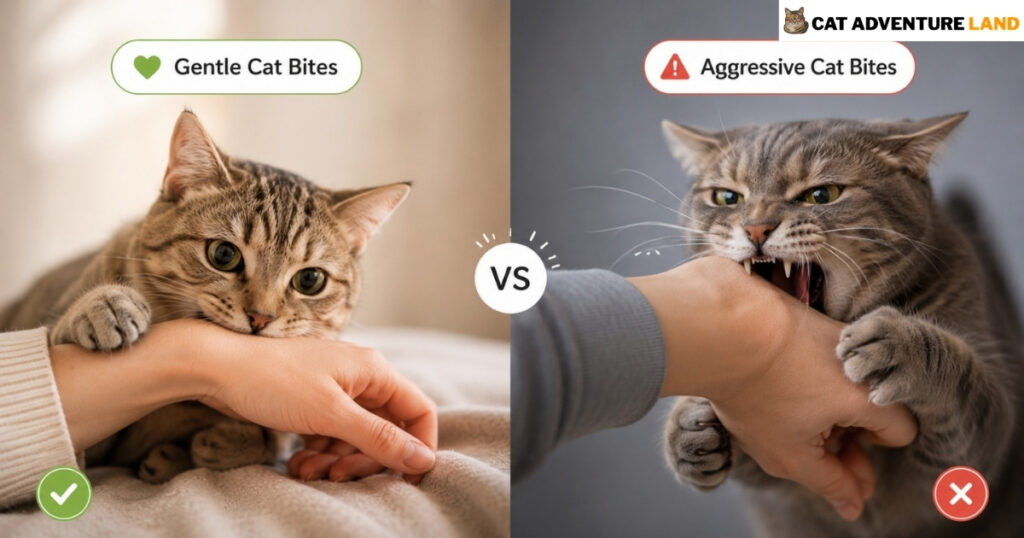
New owners understandably lump all teeth together. This comparison splits them in seconds.
| Clue | Love nibble | Trouble bite |
| Teeth | Soft press, no marks | Hard clamp, may puncture |
| Body | Loose, leaning in, kneading | Tense, puffed fur, arched back |
| Face | Slow blinks, forward ears | Hard stare, pinned ears |
| Soundtrack | Purring or silence | Hissing, growling, spitting |
| Afterwards | Stays cuddled up | Flees, hides, or strikes again |
A nibble inside a purr is a compliment. Repeated hard bites with fearful body language are a cry for help that may need a behaviourist or a vet. Calibrate your reaction to the row your cat is sitting in, not to the fact of teeth alone.
In the moment: the 10-second response
What you do in the seconds after a bite teaches your cat what teeth accomplish. Get it right and most gentle biting fades on its own.
Do this
- Stay calm and keep your voice low
- Stop petting the instant teeth touch skin
- Slide your hand away slowly, never yank it
- Offer a toy so teeth land somewhere legal
- Praise and treat calm, gentle interaction
Never do this
- Yell, shove, hit, or spray your cat
- Wrestle back or turn it into a game
- Keep petting through the warning signs
- Reward the bite with treats or big reactions
Punishment only teaches fear of you, and frightened cats bite harder and sooner. Calm withdrawal teaches that teeth end the fun, which is the lesson that actually sticks.
Teaching softer habits for life
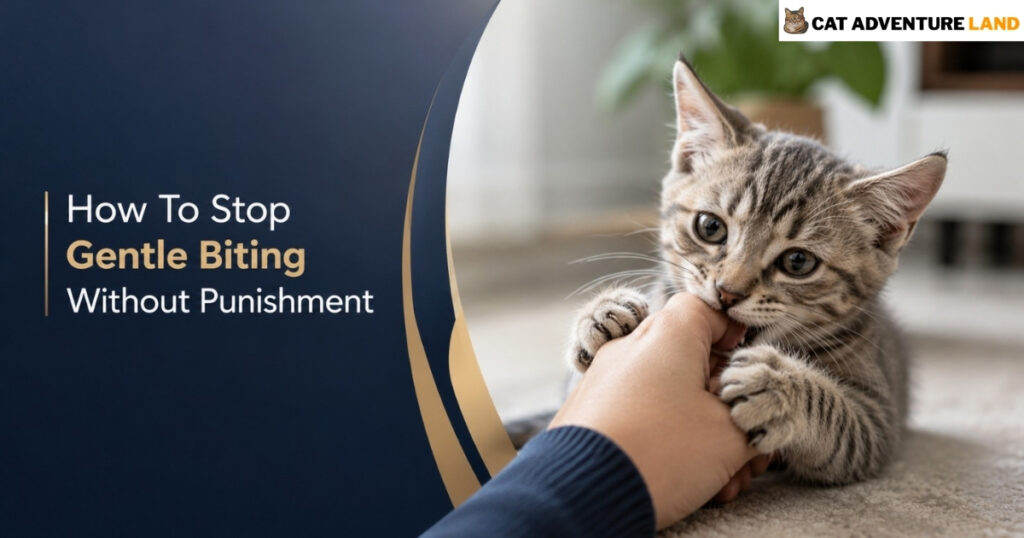
Long term change comes from routine, not reactions. Keep petting sessions short and sweet, honour the warning signs every time, play daily, feed the brain with puzzle feeders, and give vertical territory with posts and perches. Kittens deserve special patience: bite inhibition is learned from littermates and humans, so every calm freeze-and-withdraw is a lesson, and most kittens soften markedly with age when boundaries stay consistent.
Adult cats can absolutely learn too. It just takes longer to overwrite old habits, which is where a structured approach earns its keep. A step by step plan like my 3-month cat training guide turns scattered good intentions into a routine your cat can actually learn from.
When gentle biting needs a vet
Most nibbling is conversation. These developments turn it into a medical question: biting that suddenly becomes frequent, teeth breaking skin, aggression climbing, obvious pain, major behaviour changes, or any bite wound on you that swells, reddens, or throbs. Cat mouths carry bacteria that can infect puncture wounds, so wash breaks in skin promptly and seek medical advice fast if redness spreads. Quick action on both sides, vet for the cat and doctor for deep bites, prevents small problems from growing teeth.
FAQs about gentle cat bites
Why does my cat bite me gently while purring?
Purring plus soft teeth is the signature love bite: affection, contentment, and social bonding happening at once. As long as pressure stays light and the body stays relaxed, it is one of the nicest compliments a cat gives.
Are cat love bites normal?
Yes, in most cats they are completely normal. Grooming nibbles are how bonded cats treat each other, and you have simply been adopted into the practice. Only escalation in force or frequency needs attention.
Why does my cat gently bite my hand?
Hands are where the action is, so they collect every motive: affection during cuddles, play during games, overstimulation during long petting, and attention bids when you are busy. Read the body around the bite and the motive shows itself.
Should I let my cat gently bite me?
An occasional soft nibble needs no drama. But do not make biting a habit by laughing, fussing, or playing back. Calmly redirect teeth to toys and save your reactions for gentle paws and relaxed cuddles.
Do kittens grow out of gentle biting?
Most do, as bite inhibition and manners develop. Consistent boundaries, daily play, and zero hand wrestling speed the process enormously. A kitten taught well at four months is a gentle adult at four years.
Teeth are words. Learn the vocabulary.
Every gentle bite is a sentence in a small language: I love you, play with me, that is enough, I am worried, something hurts. Owners who learn to read those sentences end up bitten less and trusted more, because each correctly answered message deepens the bond.
So the next time teeth close softly on your hand, do not flinch and do not scold. Pause, read the body, answer the message, and enjoy the strange honour of being someone your cat talks to with their mouth.

Cat Adventure Land is created for cat lovers who want simple guidance that actually helps. Here you get friendly advice on daily cat care feeding grooming training and overall wellbeing. Every article is written with a focus on real life situations so you can understand your cat better and give them a healthier happier life. Our goal is to make cat care easy for everyone whether you are a new owner or caring for a senior cat.