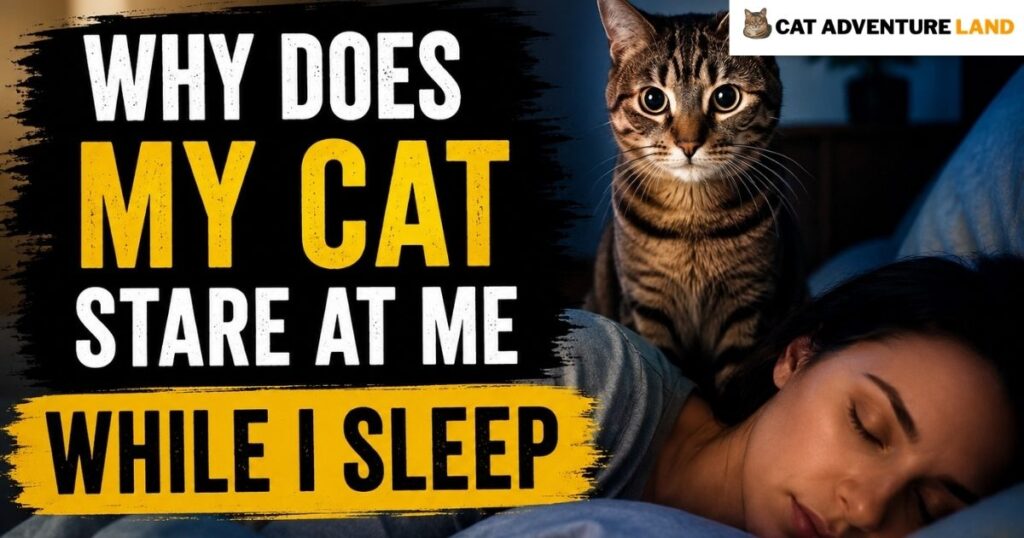
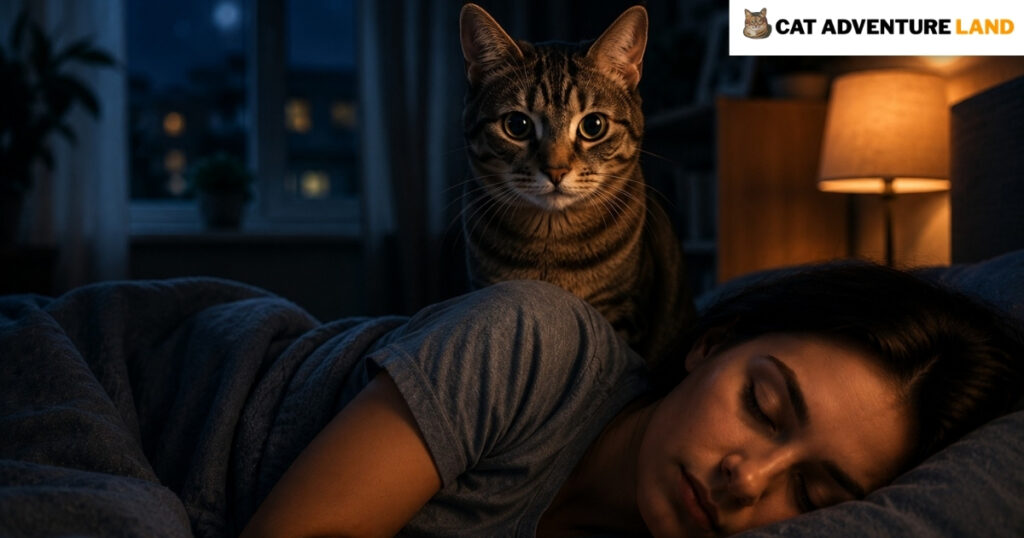
You wake at 3 a.m. for no reason, open your eyes, and there they are: two glowing eyes, inches from your face, utterly still. Your cat has been watching you sleep. Maybe for minutes. The first time it happens, every owner wonders the same thing: why does my cat stare at me while I sleep, and should I be flattered or concerned?
Mostly flattered. Nighttime staring is one of the most normal cat behaviours there is, woven from instinct, curiosity, routine, hunger, and attachment. I have woken to furry audiences for years, and once you learn the motives, the 3 a.m. face to face becomes oddly endearing rather than eerie. This guide decodes the common reasons, shows you how to read different kinds of stares, and covers the few situations where watching deserves a vet visit.
You are the most interesting channel on night TV
Start with the equipment. Your cat hears better than you, sees far better in low light, and stays mentally alert to movement and sound long after you have checked out. While you sleep, you are not still at all: breathing rhythms shift, blankets slide, you mutter and turn, the house ticks and hums. To a wired observer, a sleeping human is genuinely fascinating television.
Add attachment and the picture completes. Indoor cats live in small worlds where you are the weather, the food supply, and the entertainment system combined. Parking near the bed and studying the centre of their universe is not weird by cat logic. It is quality time. One of mine used to relocate through the night like a slow security patrol: feet at midnight, pillow by two, chest by four, each post held with total dedication.
Biology first: they are awake because it is dark
Cats are crepuscular, built to peak around dawn and dusk, which means your deepest sleep overlaps their natural alert window. Night switches on their hunting senses and environmental radar, so a cat quietly tracking your movements at 2 a.m. is simply a night shift worker doing rounds. Their night vision fills in the rest: eyes that gather every scrap of light let them follow motions you would swear were invisible.
Young cats and underplayed indoor cats stare hardest, especially in homes where the whole afternoon was one long nap. An all day sleeper with zero evening play is essentially storing daylight hours to spend on you after midnight. A cat that slept from lunch to dinner has a full battery at midnight and exactly one thing worth watching. Guess who.
They have your schedule memorised
Cats run on routine the way trains run on tracks. Feeding times, alarms, bedtimes, morning rituals: all logged, all predicted. Weekend lie-ins baffle them completely. The schedule says breakfast at seven, your body says otherwise, and the resulting stare carries genuine moral disappointment. If breakfast follows your alarm by ten minutes, your cat will learn to start watching before it rings, tracking the tiny pre-wake signals of shifting posture, changing breath, and blanket movement. Owners swear their cats can tell time. What they really do is read bodies with expert precision.
The classic scene plays out identically in thousands of homes: same cat, same spot at the foot of the bed, same minute each morning, eyes locked on your face, waiting for the first flutter of an eyelid. That is not psychic ability. That is a breakfast countdown with fur.
Or they just want something
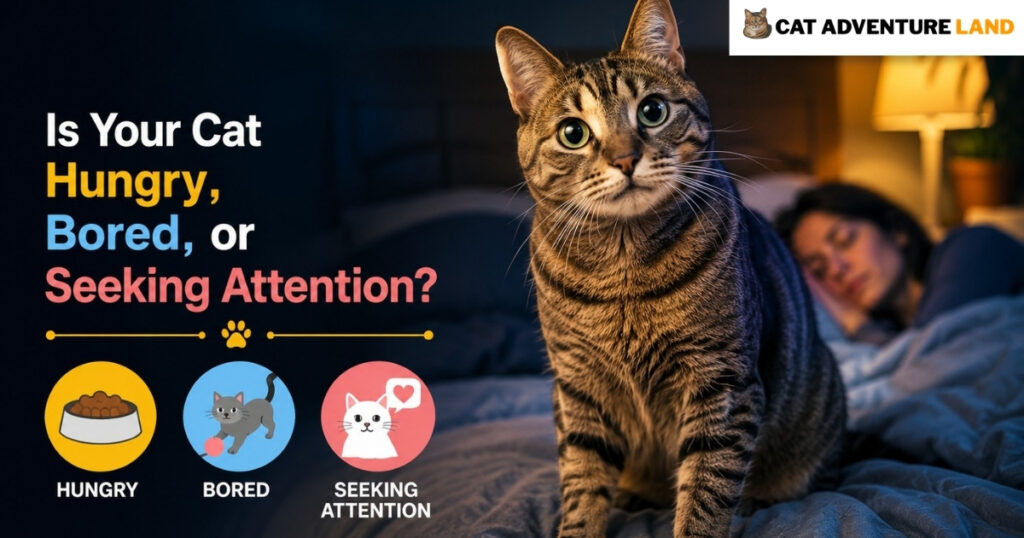
Sometimes the motive needs no psychology degree. Hunger runs this show in countless bedrooms: a cat on a strict schedule grows impatient before breakfast and supervises you until catering begins. And here is the trap most of us build ourselves. Feed the cat the moment you wake, and staring plus pawing plus yowling becomes a proven breakfast button. Within weeks you own an alarm clock that cannot be snoozed. I learned this the expensive way: one indulged 5 a.m. feeding became a month of 5 a.m. face pats before I retrained us both with a delayed feeder.
Boredom writes the same behaviour from a different motive. Cats need daily climbing, chasing, and puzzle solving, and a cat starved of it spends the night restless and fixated on the only available companion. The lonely night shift looks like silent bedside staring, pillow parades, blanket pawing, repeated meowing, face nudges, and the occasional 4 a.m. furniture scratching concert. Cats left alone all day are the prime candidates: they banked no company for hours and intend to collect it now. A ten minute play session when you get home plus another before bed drains most of that overnight restlessness at the source.
Sometimes it is just love
For all their independent branding, many cats bond fiercely. Quiet watching, slow blinking from the pillow, purring nearby, trailing you between rooms: these are love letters in cat handwriting. Owners who search for answers usually land here and smile. The cat camped on the bed is not plotting. They feel safest near their favourite human and simply like keeping them in sight. This devotion peaks in rescue cats, indoor only cats, kittens, seniors, and single pet homes, where one bond carries the whole social world. Rescue cats are the classic case. Many spend their first weeks watching from corners, then graduate to bedside vigils as trust grows. The staring that once meant fear slowly becomes the staring that means home. If yours follows you by day as well as by night, my guide on why cats follow you everywhere explains the attachment underneath.
Read the stare in five seconds
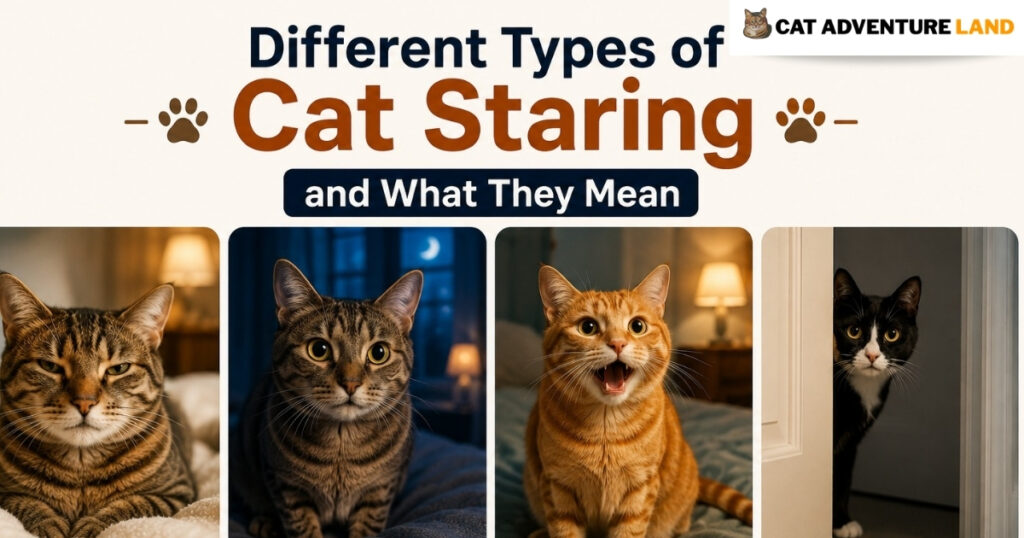
Not all staring means the same thing, so check the body around the eyes. The quick decoder below covers the five usual motives, then the detailed read follows.
| Common reason | What it usually means |
| Hunger | Waiting for food or morning routine |
| Curiosity | Tracking movement and sounds |
| Affection | Feeling close and connected |
| Anxiety | Seeking comfort and safety |
| Boredom | Wanting stimulation or company |
The slow blink stare. Heavy lidded, relaxed, blinking at you in slow motion. This is the famous cat kiss: trust and contentment, plain and simple. Blink back slowly and you have just said I love you in fluent feline. Try it tonight: catch their gaze, close your eyes for two seconds, open them gently. Most bonded cats return the blink within seconds, and first timers find it genuinely moving.
The wide eyed silent stare. Still body, huge pupils, locked on. Usually pure alertness: a noise outside, a moth on the wall, or night instincts running their scan. Hunting software idling, nothing personal.
Staring with meowing. Eyes plus voice means a request with a deadline: food, play, company, or a door that should be open. Owners reinforce this fast by responding, and learned night meowing is stubborn to undo. If yours has added a full soundtrack, the fix lives in why cats meow at night.
Watching from the doorway. Distance with attention. Common in shy cats, new rescues, and cautious personalities who want to monitor the room without committing to it. Respect the perimeter and they usually move closer over weeks. Close range face sniffing during these visits is its own quirk, covered in why cats smell your breath.
When staring means stress
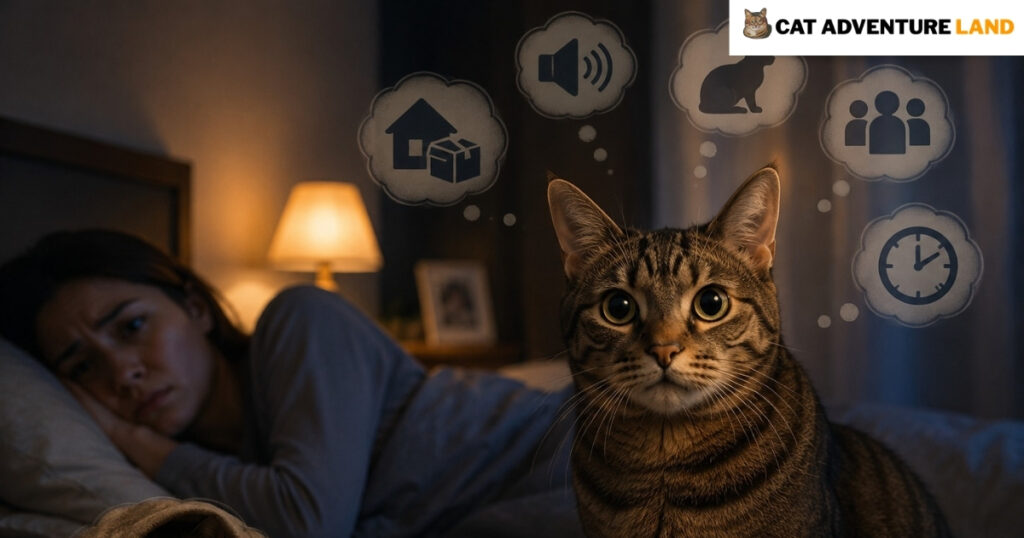
Anxiety absolutely changes night behaviour. Cats are routine conservatives, so moves, noise, new pets, visitors, and schedule upheavals can flip a calm sleeper into a clingy sentinel. The stressed version looks different from the loving version: unblinking fixation, night pacing, Velcro clinginess, excessive vocalising, daytime hiding, prickly reactions, and restless circling instead of settling.
Seniors deserve a special note, since cognitive decline can scramble night awareness and deepen after dark neediness. An old cat crying at 2 a.m. in an empty hallway, then settling the moment you speak, is showing confusion more than mischief. Night lights, familiar bedding scents, and a vet check for cognitive support all help. The rule is simple: a lifelong starer is a personality, but a sudden staring habit in a previously chill cat is information. Pair it with appetite, litter, or mood changes and a vet visit moves to the top of the list. Veterinary behaviour notes like this staring guide from Lane Vet say the same: context and suddenness decide everything.
Sleeping through the surveillance
If the watching itself does not bother you, enjoy it. If it costs you sleep, four adjustments fix most cases. Drain the battery with real daytime and evening play: wand toys, climbing trees, puzzle feeders, and a proper pre bed session. Shift food later so hunger does not strike at dawn, and consider an automatic feeder that decouples breakfast from your eyelids opening. Build an appealing alternative bed near yours, warm and high, so settling independently beats patrolling your pillow. Place a worn T-shirt on it for the first week. Your scent does half the training by making the new spot smell like the old habit. Above all, be consistent: same responses every night teach expectations, while random reactions teach that persistence sometimes pays, which guarantees more persistence.
Red flags worth a vet call
Ordinary staring needs no appointment. Book one when staring arrives with aggression, appetite loss, confusion, disorientation, excessive vocalising, hiding, visible pain, or a personality rewritten overnight. Cats conceal illness professionally, so quiet behaviour shifts are frequently the first detectable symptoms of pain, anxiety, or cognitive trouble. Senior cats with suddenly intensified night behaviour should be evaluated promptly rather than eventually.
Final thoughts: the eyes are friendly
Waking to a silent audience is startling the first few times, then it becomes oddly comforting. Curiosity, affection, routine, hunger, instinct: your cat cycles through these motives the way you cycle through sleep stages, and nearly all of them mean you matter to them. Those glowing eyes in the dark are not surveillance. They are companionship that never clocks out. Learn which stare you are seeing, answer the need behind it, and most night watching settles into the background hum of a happy cat home.
FAQs about cats staring while you sleep
Do cats protect humans while they sleep?
It can look that way, and staying alert nearby does keep watch in a loose sense. But the behaviour springs from observation instinct and bonding, not bodyguard duty. Your cat is monitoring their favourite person, not guarding the perimeter. Enjoy the company for what it is: devotion with excellent night vision.
Why does my cat stare at me at 3AM?
Because 3 a.m. is prime time in cat biology: alert, hungry, and bored in a quiet house with one fascinating sleeper. Hunger, curiosity, routine anticipation, and simple wakefulness cover nearly every case. If it comes with yowling or face patting, food timing and evening play are the two dials to turn first.
Can cats recognize when humans are asleep?
Yes, reliably. Breathing changes, stillness, and different sounds mark sleep clearly to a cat. They may not grasp what sleep is, but they read the state accurately and adjust their behaviour around it.
Why does my kitten stare at me while I sleep?
Kittens stare for the same reasons as adults, amplified by baby curiosity and fierce new attachment. Comfort seeking, routine learning, and bonding drive most of it, and the habit usually matures into calmer bedside company with age, especially once play and feeding routines stabilise.

Cat Adventure Land is created for cat lovers who want simple guidance that actually helps. Here you get friendly advice on daily cat care feeding grooming training and overall wellbeing. Every article is written with a focus on real life situations so you can understand your cat better and give them a healthier happier life. Our goal is to make cat care easy for everyone whether you are a new owner or caring for a senior cat.