
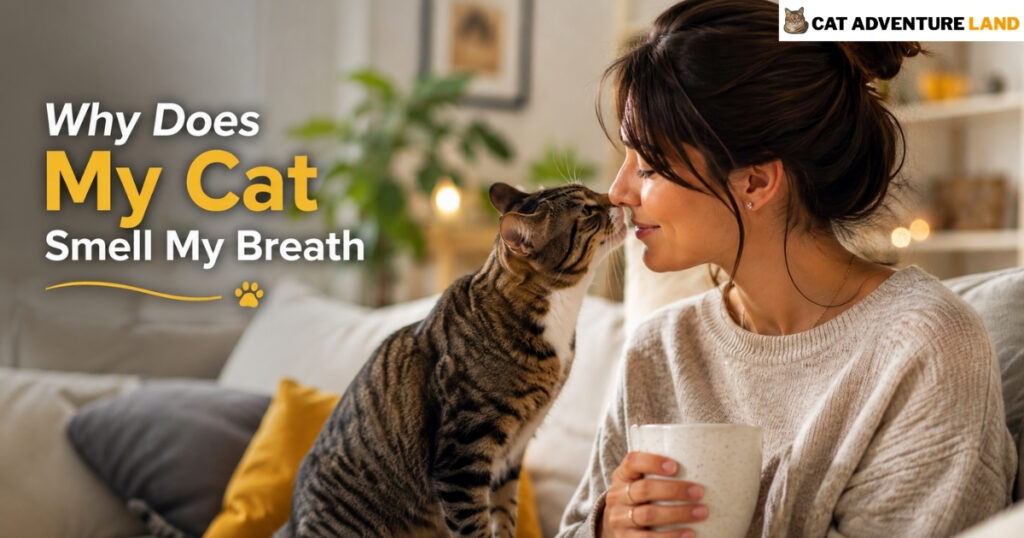
You are half asleep when you feel it: a cold nose pressed to your lips, followed by deep, serious sniffing. You open one eye to find your cat staring intently at your mouth like it holds the secrets of the universe. If you have ever wondered why your cat smells your breath, you are asking about one of the most common and most misunderstood cat habits.
Here is the reassuring truth I share with every worried owner. In the vast majority of cases, breath sniffing is harmless, normal, and often downright affectionate. Your cat is not judging your dental hygiene. They are reading you the only way they truly trust: through scent.
The 30-second version
Short on time? This table covers the whole story. Scroll on for the full explanation with real examples.
| Quick fact | What it means |
| Cats live by smell | Scent is their main way of understanding people and places |
| Your breath carries information | They can detect food, emotions, and routine changes in it |
| Morning breath smells strongest | Less saliva overnight makes scents more concentrated |
| Familiar smells bring comfort | Your scent helps your cat feel safe and relaxed |
| Night brings more curiosity | Cats grow more alert as the house goes quiet |
Your nose is weak. Theirs is a superpower.
To understand the habit, start with the hardware. Humans have around 5 to 6 million scent receptors. Cats have nearly 200 million. On top of that, they carry a second smell analyser called the Jacobson’s organ on the roof of the mouth, which lets them taste-test interesting scents for extra detail. That open-mouth grimace cats sometimes make after sniffing something? That is the Jacobson’s organ at work.
With equipment like that, your cat can pick up traces you would never notice: last night’s dinner, a stressful day, new medication, hormonal shifts, even that you skipped your usual shower time. Furniture, blankets, and doorways all get the same treatment. Your face simply happens to be the most interesting scent source in the house, and the one they love most.
What your breath is telling them
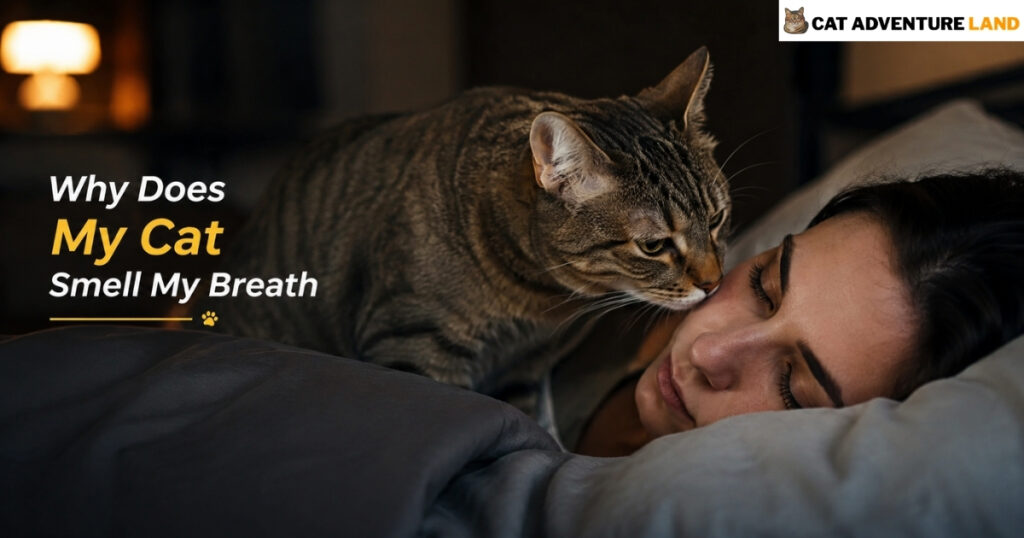
Your breath is never just breath to a cat. It shifts through the day with food, stress, hydration, sleep, medication, and oral hygiene, and each version tells a small story. Ate tuna for lunch? Your cat knows, hours later. Restless night? That reads differently too. Over time your breath becomes part of your scent signature, one more way your cat confirms that you are you: familiar, safe, theirs.
A classic example: you finish dinner, sit down to read, and within minutes your cat is on your chest with their nose aimed at your mouth. They are not begging. They are investigating. Chicken, fish, cheese, and meat leave traces that fascinate a nose built for hunting, and your mouth is where the evidence lives.
The real reasons behind the habit
There is rarely a single motive. Most breath sniffing blends two or three of these at once.
1. The dinner detective
Food curiosity is the number one driver. Cats are food motivated to their bones, and even a pampered indoor cat runs ancient hunting software. Tuna, chicken, seafood, milk, cheese, and meat all leave calling cards on human breath. So when your cat beelines for your face after a meal, picture a tiny detective arriving at a delicious crime scene.
Worth knowing: this curiosity spikes when feeding routines slip. A cat served dinner late will audit your breath with extra suspicion, as if checking whether you ate their share.
2. You smell like safety
Your scent is your cat’s security blanket. It carries associations of warmth, routine, full bowls, and calm evenings, so pressing close and breathing it in genuinely soothes them. This is a big part of why so many cats sleep on or near their owner’s pillow. It is not the pillow they want. It is the concentrated smell of their favourite human, strongest right where you breathe all night.
Anxious cats lean on this hardest. After a vet visit, a house guest, or a loud thunderstorm, do not be surprised if your cat spends the evening glued to your face, refilling their courage from your scent.
3. Sniffing is how they know it is you
Cats recognise people through a bundle of signals: voice, movement, routine, body language, and above all scent. A quick breath check confirms identity the way we might glance at a familiar face across a room. Bonded cats run these checks constantly, which is why sniffing your face sits alongside rubbing your legs, touching noses, sitting on your chest, and following you from room to room. If yours shadows you all day on top of the sniffing, my guide on why cats follow you everywhere explains the attachment behind it.
4. They are reading your routine
Cats are obsessive students of household patterns. They know your wake-up time, feeding schedule, work departures, shower habits, and bedtime better than you do. Because your breath changes through the day, sniffing it is one more way of checking the schedule. Morning breath means breakfast should be happening. Evening breath means the house should be winding down. When you break routine, expect an extra long inspection, followed by a deeply unimpressed stare.
5. Quiet love, up close
Dogs declare love loudly. Cats whisper it. Choosing to rest their face inches from yours, breathing your air during a calm cuddle, is feline intimacy at full volume. Nighttime magnifies this: the house is still, you are relaxed, and your cat finally has your complete, unmoving attention. Many owners tell me the breath sniffing started right when their shy rescue finally began to trust them. I believe every word. Vets and behaviour writers describe this same bonding pattern, including this vet-reviewed piece on Hepper which reaches the same conclusion.
Why it always happens in bed
Three bedtime factors stack the odds. First, cats are crepuscular, wired to wake up around dusk and dawn, so your sleepy hours overlap their curious hours. If the night shift comes with commentary too, that is a separate habit I cover in why cats meow at night. Second, morning breath is simply stronger stuff: saliva flow drops overnight, odours concentrate, and food traces and digestive changes stand out like headlines to a 200-million-receptor nose.
Third, and sweetest: a sleeping human is safe furniture. You are warm, still, and calm, which makes your face the perfect place for a close investigation. Trusting cats will sniff your mouth, sit by your pillow, pat your cheek, watch you sleep, and curl against your head, sometimes all in one night. If the staring part unnerves you, read why cats stare at you while you sleep. Spoiler: it is mostly the same answer as this post.
Can they actually smell illness on you?
This is where I urge healthy scepticism. Cats can absolutely detect scent changes linked to stress, hormones, medication, blood sugar shifts, and sweat. Their noses are easily sensitive enough. What they cannot do is diagnose anything. A cat sniffing you harder during a stressful month is noticing a change, not naming a disease.
That said, owners do report real behaviour shifts: cats suddenly clingy during a pregnancy, or watchful when their human is unwell. Take these stories as what they are, lovable anecdotes, not medical devices. Enjoy the extra attention, and leave the diagnosing to your doctor and your cat’s vet.
When a sniff habit suddenly changes
A stable sniffing habit needs no action. A sudden obsession is worth a second look, because it usually means something about your scent changed: new foods, new medication, illness, dental trouble, stress, or a shuffled routine. Most of these are harmless and the fascination fades as the novelty wears off.
Watch the cat, not just the habit. A happy, hungry, playful cat with a new sniffing hobby is fine. A cat whose sniffing arrives alongside appetite loss, confusion, aggression, lethargy, strange vocalising, breathing trouble, or obvious anxiety needs a vet visit, because the sniffing may be stress behaviour rather than curiosity.
Sweet signs versus vet-visit signs
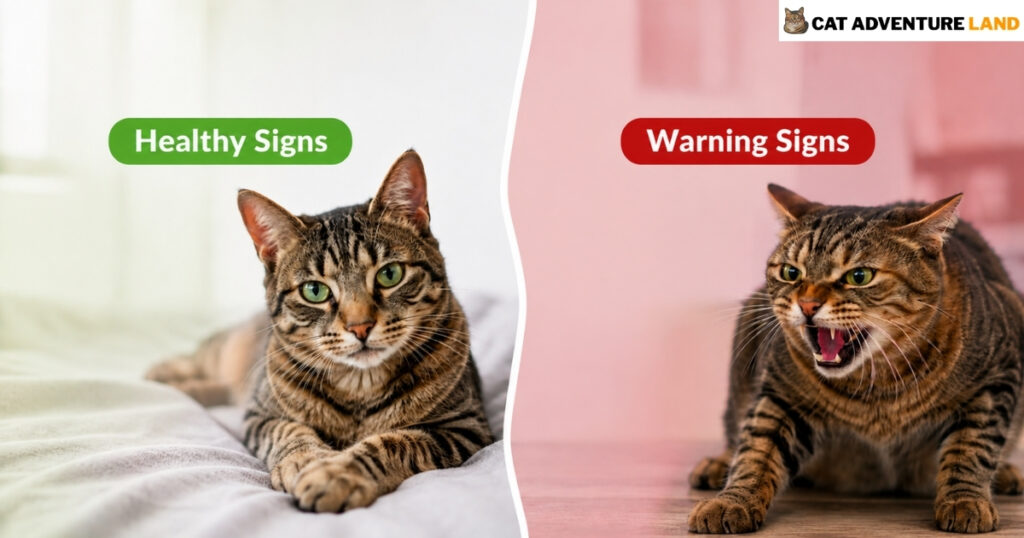
Still unsure which camp your cat falls into? Compare against this table.
| Healthy signs | Possible warning signs |
| Gentle, casual sniffing | Obsessive, frantic sniffing |
| Relaxed body, maybe purring | Tense body, aggression, panic |
| Sleeps nearby afterwards | Extreme clinginess or hiding |
| Normal appetite and energy | Appetite loss or lethargy |
| Quiet affection as usual | Breathing trouble or confusion |
How to handle a face sniffer
Most owners need to do precisely nothing. But if the habit disrupts your sleep or gets pushy, three gentle rules fix it.
Redirect night face climbing. If your cat treats your sleeping face as a landing pad, calmly move them to a cosy bed beside yours every time, without cuddles or conversation as a reward. Boring consistency reshapes night habits within a couple of weeks.
Feed on a steady clock. Predictable mealtimes calm food curiosity enormously. Cats who trust that dinner arrives on schedule audit your breath far less, and pester you at night far less too.
Track sudden changes. Keep a casual eye on appetite, mood, energy, sleep, and sociability. Cats broadcast small clues long before big problems, and owners who notice early always have easier vet visits.
Other weird things that mean “I love you”
Breath sniffing belongs to a whole family of odd-looking devotion. If your cat also does any of these, take them as compliments: watching you sleep, trailing you into the bathroom, sniffing your hair, sleeping on your chest, kneading blankets, and tapping your face with a soft paw. Every one of them traces back to the same roots: trust, curiosity, bonding, instinct, and scent.
FAQs about cats smelling your breath
Why does my cat constantly smell my breath?
Because your breath is interesting. It carries food traces, familiar scent, emotional signals, and routine clues that change through the day. Constant sniffing from an otherwise happy cat is curiosity and attachment, not a problem.
Can cats smell illness in humans?
They can notice scent changes that come with illness, stress, hormones, or medication. But noticing a change is not diagnosing one. Treat extra sniffing during tough times as attention, not as medical advice.
Why is my cat obsessed with my mouth?
Your mouth is warm, moist, and rich with food and body scents, which makes it the most fascinating square inch of you. Add bonding, and you get a cat who finds your mouth more interesting than television.
How do cats choose their favourite person?
They pick whoever feels safest: calm handling, predictable routines, good food timing, and respect for boundaries. Sleeping nearby, slow blinking, face sniffing, and following you around are all votes in your favour.
Is it safe to let cats sleep in your bed?
For most people, yes. The real costs are lighter sleep and the occasional 4 a.m. face inspection. Allergy sufferers and very light sleepers may prefer a comfy cat bed beside the human one as a compromise.
A nose on your lips means you are home
So the next time whiskers tickle your chin at midnight, you will know the truth. Your cat is curious about your dinner, comforted by your scent, confirming you are theirs, and passing a quiet moment with their favourite human. That strange little habit is one of the warmest compliments a cat can pay.
Cats read the world through scent, and they reserve their closest reading for the people they trust most. Being worth sniffing is, in feline terms, a genuine honour.

Cat Adventure Land is created for cat lovers who want simple guidance that actually helps. Here you get friendly advice on daily cat care feeding grooming training and overall wellbeing. Every article is written with a focus on real life situations so you can understand your cat better and give them a healthier happier life. Our goal is to make cat care easy for everyone whether you are a new owner or caring for a senior cat.