
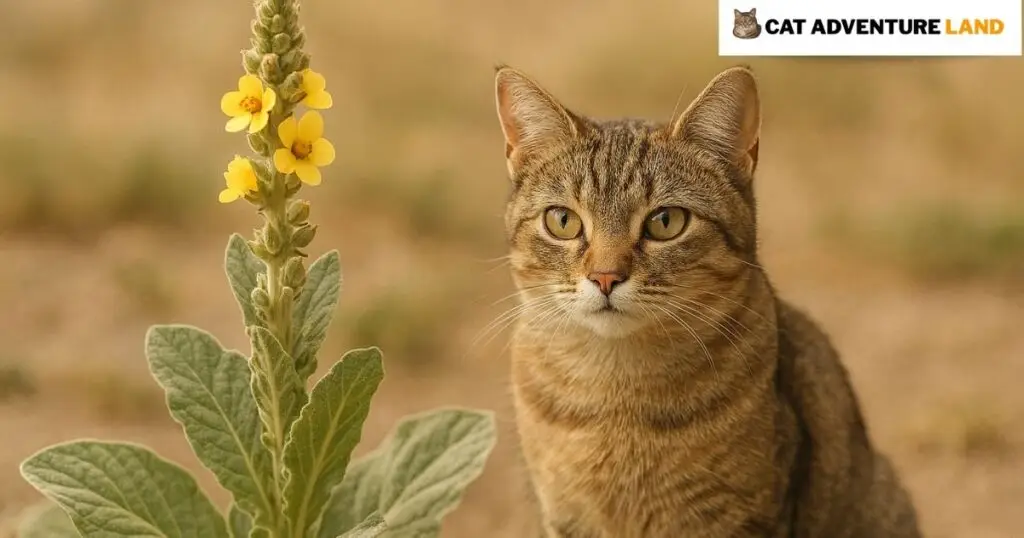
Mullein is becoming a popular herb among pet owners, but many still wonder, Is Mullein Safe for Cats? Before giving this plant to your feline friend, it’s important to understand how it affects their body and whether it truly supports cat respiratory health. Some people use mullein as part of natural cough remedies for cats, while others explore it for feline asthma natural relief. This guide explains the benefits, risks, and safer options for your pet’s well-being.
What Is Mullein? A Simple Guide for Cat Owners
Mullein is a tall, soft-leafed plant known for its fuzzy mullein leaves and bright yellow mullein flowers. Historically, this plant has been used in herbal medicine for humans because of its anti-inflammatory, antibacterial, and herbal expectorant properties. Many people use it for coughs, chest congestion, asthma, and respiratory inflammation. This is why some pet owners search for answers and ask, “Is Mullein Safe for Cats?”
Mullein benefits for pets have also become popular. Some pet owners believe it supports cat respiratory health, reduces throat irritation, and works as part of feline wellness supplements. Because of these claims, many people start wondering again, “Is Mullein Safe for Cats?”, especially before trying any herbal remedy.
However, just because a plant helps humans does not mean it is automatically safe for cats. Cats have unique digestive systems and livers that respond differently to herbs. Before deciding, it’s important to understand exactly how mullein affects the respiratory system and whether it is safe for pets. Asking “Is Mullein Safe for Cats?” is the right first step toward protecting your pet’s health.
Is Mullein Safe for Cats? The Straightforward Answer
Many owners ask: Can cats have mullein? Is mullein toxic to cats?
The straightforward answer is this:
Mullein is generally considered low-toxicity, but it is not officially proven safe for cats.
This means mullein is not known to be extremely poisonous like lilies or oleander, but it still carries risks. The plant contains natural compounds that may irritate a cat’s digestive system, trigger allergic reactions in cats, or cause mullein side effects in sensitive pets.
Most concerns come from:
- Lack of official veterinary herbal consultation
- Inconsistent mullein dosage for cats
- Harmful additives in some mullein tinctures
- Potential mullein toxicity in cats at high doses
Because cats process herbs differently than humans or dogs, even “safe herbs for pets” can become dangerous.
So although some people use mullein for cats with asthma or cat bronchitis remedies, it must never be given without professional guidance.
To avoid risks, pet owners should understand why mullein is used and what dangers it may carry.
Why Do Pet Parents Use Mullein? Common Benefits and Claims
People often use mullein because they believe it offers natural respiratory support for cats. The plant’s soft, fuzzy leaves contain compounds that may soothe irritated airways. Although scientific evidence for cats is limited, common claims about mullein benefits for pets include:
Possible Benefits People Believe In
- Relief from coughing or throat irritation
- Support for breathing issues
- Help with mild congestion
- Natural cough remedies for cats
- Feline asthma natural relief
- Herbal supplements for feline asthma
- Support for ear infections
- A mild soothing or calming effect
Cat owners who prefer feline holistic care often combine mullein with other herbs such as licorice root for cats, marshmallow root for pet respiratory health, or chamomile for cats.
A Helpful Table: Claimed Benefits vs. Known Concerns
| Claimed Benefits of Mullein | Scientific Reality | Risks to Cats |
| Helps with coughing | Some human research only | Possible vomiting or irritation |
| Soothes breathing issues | Not proven Is Mullein Safe for Cats | Respiratory inflammation if allergic |
| Eases inflammation | Limited evidence for pets | Mullein and pet allergies |
| Works as herbal expectorant | Human-based research only | Symptoms of toxicity in cats |
Because scientific evidence for animals is limited, mullein should be handled carefully. Cats are sensitive, and even mild sedative effects of herbs may disturb their system.
Potential Risks of Mullein for Cats
Even though some people use mullein medicinally, there are real risks of mullein for cats.
This plant is not classified as deadly, but its compounds may still disturb your cat’s body.
Main Risks Include
- Digestive upset
- Feline digestive inflammation
- Allergic reactions or skin irritation
- Breathing difficulty if inhaled in powder form
- Herb overdose leading to vomiting or diarrhea
- Interaction with medications
- Unsafe additives in tinctures
Cats exposed to mullein leaves or mullein flowers may also show:
- Redness around the mouth
- Drooling
- Pawing at the face
- Sneezing or coughing
In some cases, mullein toxicity in cats appears if the herb is consumed in large amounts or prepared incorrectly.

Which Forms of Mullein Are Most Dangerous for Cats?
Different forms of mullein vary in safety. Some are more risky than others.
1. Alcohol-Based Mullein Tincture
This is the most dangerous form for cats.
Cats cannot process alcohol, even in small amounts. An alcohol-based mullein tincture for cats can cause poisoning, shaking, vomiting, and severe digestive issues.
2. Mullein Tea Preparation
Some owners wonder how to prepare mullein tea for pets.
While mullein tea may be mild for humans, the concentration may still irritate a cat’s stomach or cause mullein side effects.
3. Mullein Leaf Infusion for Cats
A mullein leaf infusion can cause coughing or irritation if inhaled or ingested in large amounts.
The fuzzy texture may also irritate the throat.
4. Glycerin-Based Mullein Tincture
A glycerin-based mullein tincture might be safer than alcohol, but still not recommended without veterinarian guidance. Even mild herbal extracts may trigger reactions in sensitive cats.
5. Dried Mullein Leaves or Powders
Cats may inhale the powder accidentally, which can irritate the lungs and trigger respiratory inflammation.
Important: Avoid giving mullein for dogs dosage instructions to cats. Their digestive systems are completely different.
Signs of Mullein Toxicity in Cats
If your cat ingests mullein accidentally or receives too much, watch for the following symptoms of toxicity in cats:
- Vomiting or diarrhea
- Swelling of the mouth or lips
- Breathing trouble
- Lethargy or weakness
- Excessive drooling
- Sudden coughing or sneezing
- Red or irritated skin
- Loss of appetite
In rare cases, cats may develop mullein and pet allergies that cause swelling around the eyes or difficulty breathing.
What to Do If Your Cat Ingests Mullein
If your cat accidentally eats mullein:
Immediate Steps
- Remove the plant or product from your cat’s reach
- Offer fresh water
- Check for symptoms like vomiting or drooling
- Avoid home remedies that worsen the situation
Do not attempt to induce vomiting unless a veterinarian specifically instructs you.
If symptoms appear within an hour, contact a professional immediately. Cats react quickly to herbs, so quick action is important.
Safe Herbal Alternatives for Cats
If you want cat-friendly herbal solutions, consider safer options supported by veterinary herbalists.
Common Alternatives
- Licorice root for cats (great for throat soothing)
- Marshmallow root (helps with pet respiratory health)
- Chamomile for cats (gentle calming effect)
- Catnip or cat-safe medicinal plants recommended by vets
These herbs are often used in herbal remedies for pet inflammation, natural calming herbs for cats, and safe herbs for breathing issues in cats.
Table: Mullein vs. Safer Herbal Alternatives
| Herb | Safety Level | Common Uses |
| Mullein | Caution | Cough, respiratory irritation |
| Licorice Root | Safer | Throat support, anti-inflammatory |
| Marshmallow Root | Safer | Respiratory support |
| Chamomile | Safe | Calming, digestive ease |
| Slippery Elm | Safe | Sore throat, irritation |
If you want natural remedies for coughing cats, safer herbs may help without the same risks.
How to Keep Indoor and Outdoor Cats Away From Harmful Plants
Cats love exploring plants. To prevent exposure:
- Keep indoor plants on high shelves
- Use motion-activated pet deterrents
- Avoid growing risky herbs near cat-friendly areas
- Create a designated “cat garden” with safe plants
- Use natural sprays cats dislike around outdoor plants
Avoiding toxic plants for pets helps reduce accidents.
When to Contact a Veterinarian for Herbal-Related Concerns
Always seek a veterinary herbal consultation if:
- You want to start your cat on herbal supplements
- Your cat already has asthma or breathing issues
- You notice changes in appetite or behavior
- Your cat is on medication
- You are unsure about mullein dosage for cats
A vet can create a proper cat herbal dosage guide and ensure safe herbal dosage for cats.
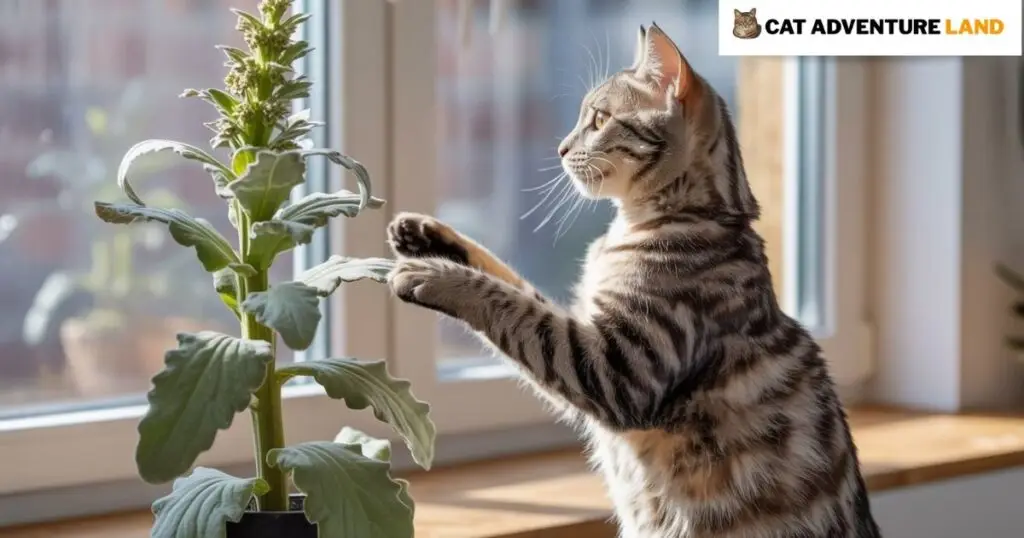
Case Study: A Cat Exposed to Mullein Tea
A pet owner in California brewed mullein tea preparation for her own cough. Her cat drank a small amount from the cup.
Within 20 minutes, the cat began drooling and vomiting. The owner rushed to the vet, who treated the cat for mild irritation. The cat recovered, but the veterinarian warned that even herbal expectorant plants can harm feline digestive systems.
Quote from the veterinarian:
“Herbs may be natural, but they are not automatically safe for cats. Always ask first.”
Conclusion: So, Is Mullein Safe for Cats?
The question “Is Mullein Safe for Cats?” does not have a simple yes or no answer. Mullein is not considered highly toxic, but it is not proven safe either. Because of potential risks like mullein toxicity in cats, allergic reactions, digestive irritation, and unsafe mullein for cats dosage levels, it should only be used under professional guidance. This is why many pet owners still ask, “Is Mullein Safe for Cats?” before trying any herbal remedy.
If you want to support your cat’s breathing health, choose safer herbs, rely on veterinary advice, and watch your pet closely. Natural remedies can help, but they must be used wisely. Always consider expert recommendations when wondering, “Is Mullein Safe for Cats?”

Cat Adventure Land is created for cat lovers who want simple guidance that actually helps. Here you get friendly advice on daily cat care feeding grooming training and overall wellbeing. Every article is written with a focus on real life situations so you can understand your cat better and give them a healthier happier life. Our goal is to make cat care easy for everyone whether you are a new owner or caring for a senior cat.