
Mullein has ridden the herbal wellness wave straight into pet circles, and cat owners are asking pointed questions about it. Can it soothe a coughing cat? Help a wheezy senior breathe easier? The honest answer is more cautious than the marketing, and this guide lays out the full picture: what mullein is, why people try it, where the real risks sit, and which gentler options deserve the conversation with your vet instead.
One principle runs through everything below. Cats are not small humans and not small dogs. Their livers process plant compounds differently, so a herb with centuries of human use can still be the wrong choice for feline lungs and stomachs. I have watched owners learn this the worrying way, and the lesson below will save you the emergency visit.

What mullein actually is
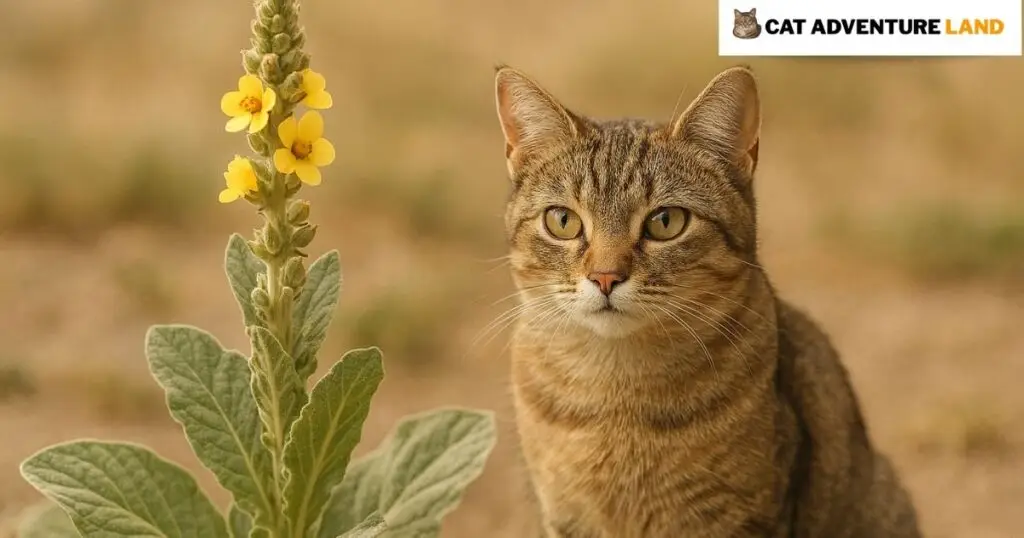
Mullein is a tall plant with soft fuzzy leaves and spikes of yellow flowers, long used in human herbalism for coughs, chest congestion, and airway inflammation thanks to its anti-inflammatory and expectorant reputation. Pet owners naturally extrapolated: if it soothes human throats, might it help a cat’s breathing too? That leap powers the current interest in mullein for coughing, throat irritation, and general respiratory support. But extrapolation is not evidence, and feline bodies grade herbs on their own harsh curve. A quick look at how the feline respiratory system works shows why small airways leave little margin for irritants.
The straightforward answer on safety
Here it is plainly: mullein is generally considered low in toxicity, but it is not officially proven safe for cats. That middle ground matters. The plant is nowhere near lily or oleander territory, yet its compounds can still upset feline digestion, trigger allergies, and cause side effects in sensitive individuals. Most of the danger clusters around four gaps: thin veterinary guidance, no established cat dosing, questionable additives in commercial tinctures, and toxicity at high or concentrated doses. Used for asthma or breathing type symptoms without professional direction, it crosses from unproven into unwise fast. Think of this section as the speed limit sign: low toxicity means proceed with expert supervision, never floor it on internet advice.
Why owners reach for it anyway
Belief runs ahead of proof here. The commonly claimed benefits include cough and throat relief, easier breathing, milder congestion, calming effects, and even ear support, sometimes stacked with licorice root, marshmallow root, or chamomile in holistic style blends. Every claim on that list comes from human tradition or hope, not from feline trials, which currently do not exist in any meaningful form.
Claims versus reality
| Claimed benefit | Scientific reality | Risk to cats |
| Helps with coughing | Some human research only | Possible vomiting or irritation |
| Soothes breathing issues | Not proven in cats | Respiratory inflammation if allergic |
| Eases inflammation | Limited evidence for pets | Allergic reactions possible |
| Works as herbal expectorant | Human based research only | Toxicity signs at wrong doses |
The pattern is consistent: human data, pet guesswork. Cats react strongly even to mild herbal sedative and irritant effects, so limited evidence plus real sensitivity equals handle with extreme care.
The real risks, spelled out
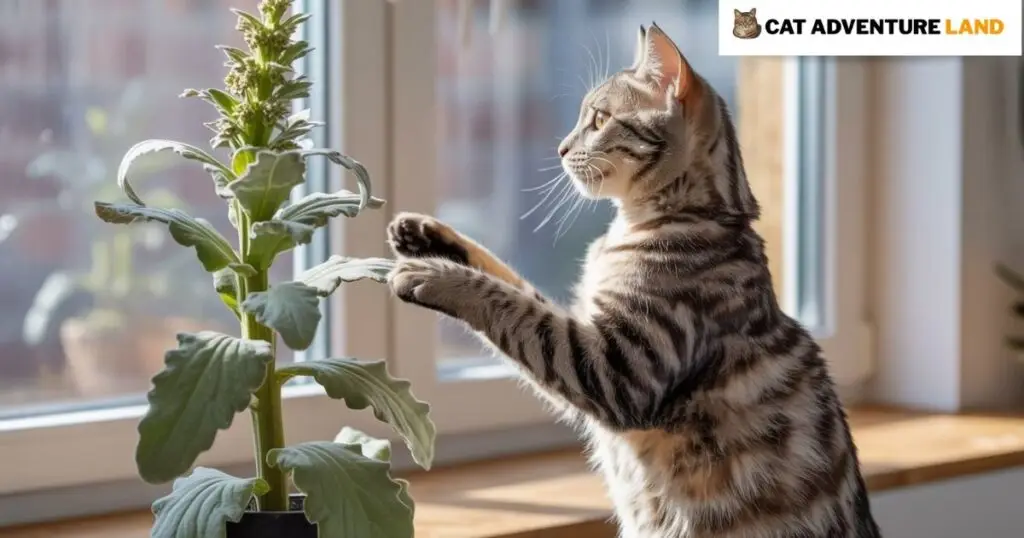
Low toxicity is not a clean bill of health. Documented style concerns include digestive upset and gut inflammation, allergic and skin reactions, breathing difficulty when fine powder is inhaled, vomiting or diarrhoea from overdoing the amount, clashes with existing medications, and the additive lottery inside commercial tinctures. Cats that mouth the leaves or flowers directly may show redness around the lips, drooling, face pawing, sneezing, or fresh coughing. Large amounts or botched preparation push all of this from possible toward likely. Kittens, seniors, and cats already on medication sit closest to the edge, since small bodies and busy livers amplify every reaction.
The five forms, ranked by danger
1. Alcohol based tincture: the worst option
Cats cannot process alcohol, full stop. Even the small amounts in tincture drops can trigger poisoning signs: shaking, vomiting, and severe gut distress. This form should never be anywhere near a cat.
2. Brewed mullein tea
Mild for humans does not transfer. Tea concentrations can still irritate feline stomachs and produce side effects, especially in small or sensitive cats. The cup on your nightstand counts as an exposure risk.
3. Leaf infusion
Stronger than casual tea and riskier for it. Large amounts can provoke coughing and gut irritation when swallowed, and the leaf’s fuzzy texture itself can scratch and annoy the throat on the way down.
4. Glycerin based tincture
Safer than alcohol based versions in theory, still not recommended without a vet steering. Sensitive cats react to mild extracts unpredictably, and glycerin changes nothing about dosing uncertainty.
5. Dried leaves and powders
The inhalation hazard defines this form. Airborne powder drifts into lungs and eyes, irritating airways and sparking inflammation. Store all dried herbs sealed and far from curious noses. A spice jar left open on a low shelf is an invitation no cat declines, and the sneeze fit that follows is the mild version of what inhaled powder can do. And never apply dog dosing logic to cats. The two species process herbs on entirely different terms.
Toxicity signs to memorise
After accidental ingestion or an overgenerous dose, watch for vomiting or diarrhoea, mouth or lip swelling, laboured breathing, lethargy, heavy drooling, sudden coughing or sneezing fits, reddened irritated skin, and appetite vanishing. Allergic individuals can escalate to swelling around the eyes and genuine breathing distress. Any of these within the first hour means the situation is already urgent.
If your cat already got into it
Move fast and keep it simple. Remove every trace of the plant or product from reach, offer fresh water and note whether drinking looks normal against the baseline in why cats drink a lot of water, and check closely for vomiting, drooling, or breathing changes. Skip home remedy experiments that can worsen irritation, and never induce vomiting unless your vet explicitly orders it. Symptoms inside the first hour mean calling the professional immediately, because cats process herbs quickly and small bodies leave little buffer.
Gentler options to discuss with your vet
Veterinary herbalists point toward better studied alternatives for throat and airway comfort: licorice root for throat soothing, marshmallow root for respiratory support, chamomile for gentle calming and digestive ease, slippery elm for sore throat irritation, and catnip plus other vet approved cat safe plants. Discuss, not self prescribe, remains the rule. Even gentle herbs interact with medications and conditions, a conversation that matters most for older animals covered in how long cats live and how ageing changes them.
| Herb | Safety level | Common uses |
| Mullein | Caution | Cough, respiratory irritation |
| Licorice root | Safer | Throat support, anti-inflammatory |
| Marshmallow root | Safer | Respiratory support |
| Chamomile | Safe | Calming, digestive ease |
| Slippery elm | Safe | Sore throat, irritation |
Keeping cats away from risky plants
Prevention beats treatment for plant curious cats. Elevate indoor greenery beyond jumping range, deploy motion activated deterrents at favourite prowling spots, keep doubtful herbs out of cat frequented zones, plant a dedicated cat garden of certified safe greens as a legal outlet, and ring outdoor specimens with scents cats dislike. Every barrier you add is an emergency visit you never take.
When the vet joins the conversation
Book a proper herbal consultation before starting any supplement, immediately if your cat already has asthma or breathing trouble, at any appetite or behaviour shift during herbal experiments, whenever current medications could interact, and whenever dosing feels like guesswork. A vet translates internet folklore into a measured plan with actual milligram accountability.
The California teacup lesson
A California owner brewed mullein tea for her own cough and left the cup unattended. Her cat sampled it. Within twenty minutes came drooling and vomiting, then an urgent vet visit that ended with treatment for mild irritation and a full recovery. The veterinarian’s warning stuck: “Herbs may be natural, but they are not automatically safe for cats. Always ask first.” One careless cup, one frightened afternoon, one lesson permanently learned.
FAQs about mullein and cats
Is mullein safe for cats?
It sits in the uncomfortable middle: generally considered low in toxicity but never proven safe, with real risks around dosing, allergies, and tincture additives. Only use it under direct veterinary guidance, if at all.
Can I give mullein to my asthmatic cat?
Not on your own initiative. Asthma management needs proper diagnosis and proven medication, and unproven herbs can delay effective treatment while adding irritation. Discuss every supplement with the vet managing the asthma.
What should I do if my cat drank mullein tea?
Remove the tea, offer fresh water, and watch for drooling, vomiting, or breathing changes. Call your vet promptly if any symptom appears, especially within the first hour. Never induce vomiting without veterinary instruction.
Which herbs are safer alternatives?
Veterinary herbalists generally prefer licorice root, marshmallow root, chamomile, and slippery elm for throat and airway comfort, each with a better understood safety profile. Even these deserve a vet’s approval before use.
Natural is not a safety certificate
Mullein occupies the grey zone honestly: not highly toxic, not proven safe, and risky enough through dosing chaos, allergies, gut irritation, and dangerous alcohol preparations that casual home use makes no sense. Support your cat’s breathing with vet approved options, watch them closely, and let expertise, not folklore, decide what goes in the bowl. Your cat cannot read labels or weigh evidence. That job, and the peace of mind that comes with doing it properly, belongs entirely to you, every single time.

Cat Adventure Land is created for cat lovers who want simple guidance that actually helps. Here you get friendly advice on daily cat care feeding grooming training and overall wellbeing. Every article is written with a focus on real life situations so you can understand your cat better and give them a healthier happier life. Our goal is to make cat care easy for everyone whether you are a new owner or caring for a senior cat.