
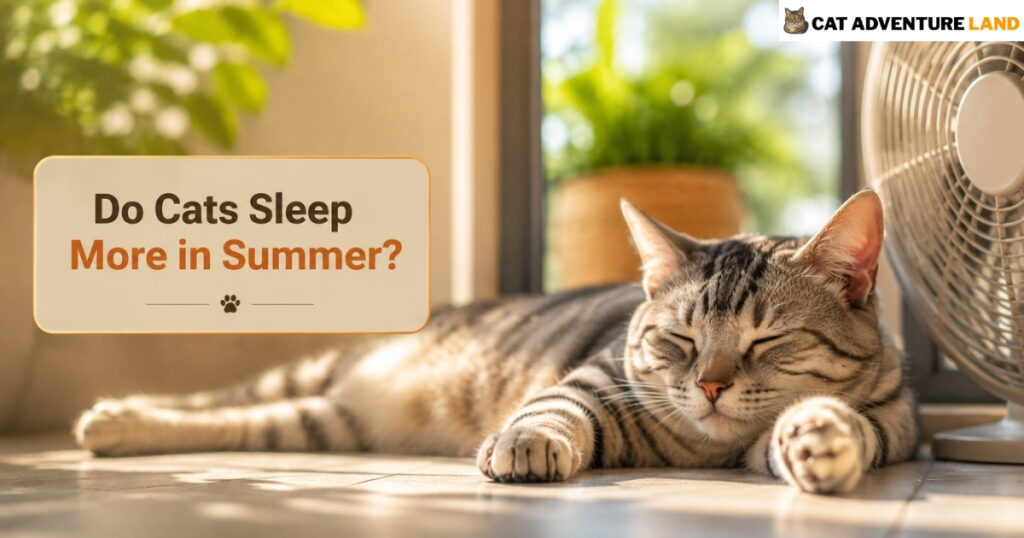
Every summer it happens. Your playful cat melts onto the bathroom tiles like a dropped ice cream and barely moves until sunset. Playtime gets ignored, the sunny window seat sits empty, and you start wondering: do cats sleep more in summer, or is mine actually unwell?
In most cases, it is completely normal. Cats already sleep 12 to 16 hours a day, and heat pushes that number up. Like us on a sweltering afternoon, they slow down to stay cool. The trick is knowing where healthy summer laziness ends and real trouble begins, because heat can genuinely harm cats. This guide covers both.
The short answer: yes, summer makes cats sleepier
Healthy adult cats sleep 12 to 16 hours daily in any season, and seniors often sleep longer (sleep patterns shift a lot with age, as I explain in how long cats live and what changes as they age). In hot weather the total climbs, because every sprint and climb generates body heat. Resting, grooming, and sprawling somewhere cool are how cats regulate temperature, since they barely sweat at all. Extra summer sleep is a cooling strategy, not laziness.
You will typically see longer naps, skipped afternoon play, starfish poses on tile, retreats to shaded corners, and a cat parked in front of the fan. Calmer and quieter is the summer default. As long as the basics hold (eating, drinking, litter box, responding to you, some evening spark), there is nothing to fix.
Why heat turns cats into puddles
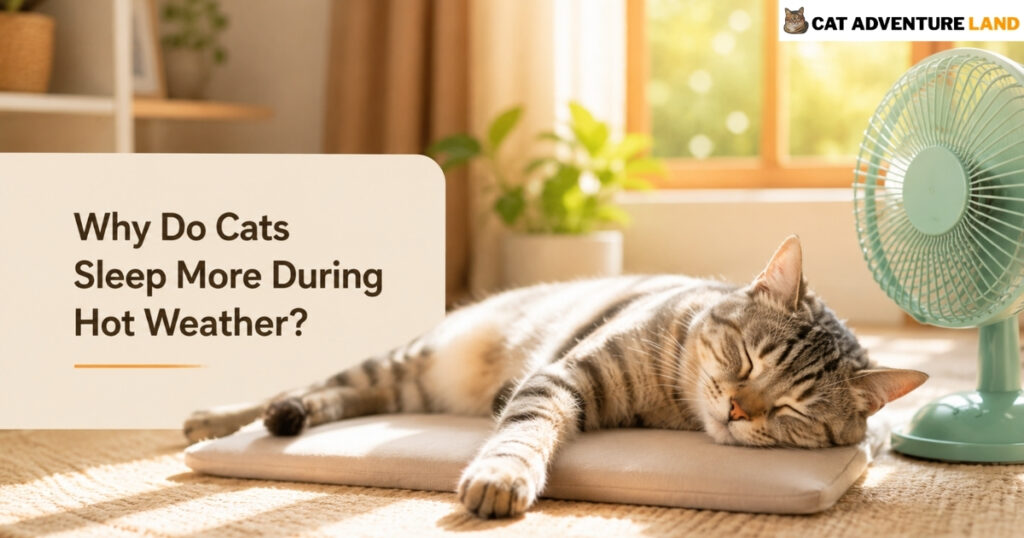
Three things team up every summer. Understand them and your cat’s behaviour stops looking broken.
Moving makes heat, so they stop moving
Running, climbing, and wrestling all raise internal temperature. On a hot day your cat’s body does the maths and chooses the couch. This hits long-haired, overweight, and senior cats hardest, since their bodies hold heat longer. If your Persian has surrendered entirely by noon, that is physics, not attitude.
Desert instincts run the schedule
Today’s sofa cat descends from desert animals that survived by sleeping through furnace-hot afternoons and hunting in the cool edges of the day. Modern cats keep the programme. Expect a lively burst at dawn, a corpse-like performance all afternoon, and a second wind after dark. Classic scenario: dead to the world at 3 p.m., sprinting down the hallway at 11 p.m. like nothing happened.
Long daylight scrambles their clock
Extra sunlight shifts the hormones behind daily rhythms, so many cats nap harder by day and come alive after sunset. You cannot change the sunrise, but an evening play session tires them out enough to keep the night shift short. And if your suddenly nocturnal cat has also taken to watching you sleep, that quirk gets its own explanation in why cats stare at you while you sleep.
Indoor cats feel it most
Outdoor cats at least find breezes and shade. An indoor cat in a still, sun-baked apartment has fewer options and less to do, so summer sleep hits them hardest. Losing interest in toys, abandoning sunny windows for cool floors, going quiet, spending hours alone in the bathroom: all standard summer behaviour.
My rule for indoor cats is the evening test. A healthy hot cat still shows a spark after sunset: eats dinner with interest, accepts some play, grooms, greets you. If the spark is there, the daytime coma is just climate control. If your cat barely responds even in the cool hours, keep reading.
Normal naps versus real trouble
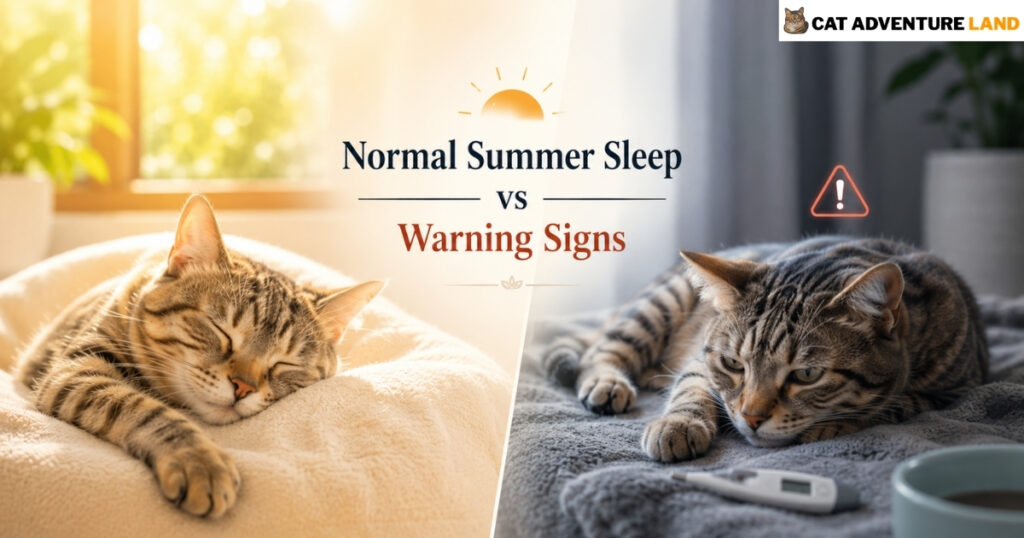
This is the section to bookmark. Normal and dangerous can look similar at a glance, so compare against these two lists.
Relax, this is fine
- Sleeping a bit more than usual
- Choosing cool spots and sprawling out
- Eating and drinking normally
- Bright and responsive when awake
- Grooming as usual
- Still social, at least in the evenings
Act, this is not fine
- Refusing food or water
- Panting hard or breathing fast
- Vomiting or drooling
- Stumbling, weakness, or limpness
- Hiding nonstop and hard to rouse
- Dry or pale gums, confusion
Cats hide illness with professional skill, so heat problems can escalate fast. Any item on the second list earns immediate action, not a wait-and-see approach.
Who struggles most when temperatures climb
Heat is not equal opportunity. Some cats run out of cooling capacity much earlier, and these are the ones to watch like a hawk during heatwaves.
| Cat type | Why heat hits harder |
| Long-haired cats | Thick coats trap heat |
| Senior cats | Weaker temperature control |
| Overweight cats | Extra insulation holds warmth |
| Flat-faced breeds | Narrow airways, harder cooling |
| Kittens | Dehydrate faster than adults |
Overheated cats can slide into dehydration and heat exhaustion, especially in rooms with no airflow. Early trouble often looks like restlessness and clinginess before it looks like illness. Vets who treat summer cases every year describe the early signs of summer stress in cats, and they are worth memorising before the next heatwave.
Keeping your cat cool all summer
You do not need to refrigerate your home. A few targeted changes carry most cats through the season comfortably.
Water everywhere, always fresh
Scatter several bowls of cool water around the house and refresh them daily. Many cats drink far more from a fountain, since moving water reads as fresh. Wet food quietly adds a lot of fluid too. And if your cat’s drinking suddenly spikes beyond summer thirst, read my guide on why cats drink a lot of water to know what is normal and what needs a vet.
Build cool crash pads
Follow your cat’s lead: tile, bathroom floors, shaded rooms, the draught by the fan. A cooling mat in their favourite spot gets used fast. My favourite cheap trick is a frozen water bottle wrapped in a thin towel tucked beside their bed. It melts into a cool pillow by afternoon.
Brush more, shave never (usually)
Regular brushing pulls out loose undercoat and lets air reach the skin, which matters most for long-haired cats. Full shaving sounds helpful but usually backfires, because fur also protects against the sun. If the coat is matted, ask a groomer or vet rather than taking clippers to it yourself.
Play at dawn and dusk, never at noon
Exercise still matters, but schedule it like their ancestors would: early morning and late evening, when the air is coolest. Skip intense afternoon sessions entirely. A gentle feather wand game at 9 p.m. beats a forced noon workout that ends with a panting cat.
The summer personality swap
Do not be surprised if your cuddle bug turns independent for a few months. Less play, less lap time, more solitude in cool hideouts: warmth makes closeness uncomfortable, and many cats ration their affection until evening. It almost always reverses when temperatures drop.
One caution: boredom plus heat is a miserable combo for indoor cats. Rotate puzzle toys, keep a perch with a view, and protect those short evening play sessions. Mental activity keeps summer from becoming one long stuffy blur.
When to call the vet tonight, not tomorrow
Daytime sleepiness can wait. These cannot:
- No food for 24 hours, or refusing water
- Heavy panting that will not settle
- Pale or dry gums
- Stumbling, severe weakness, or collapse
- Repeated vomiting
- Confusion, disorientation, or impossible to wake
Heat exhaustion moves fast in cats, and early treatment changes outcomes completely. When in doubt, call. Vets would far rather reassure you about a sleepy cat than treat an emergency that waited too long.
Final thoughts: let them loaf, but stay alert
So yes, cats sleep more in summer, and a cat melted across the kitchen floor in July is usually doing exactly what nature designed. Give them water, cool spots, brushed coats, and evening play, and most sail through the season.
Your only real job is the evening test: a spark after sunset means all is well. No spark, or any red flag from the lists above, means action. Enjoy the quiet afternoons. Autumn zoomies will be here soon enough.
FAQs about cats sleeping in summer
Do cats get lazy in hot weather?
They get strategic, not lazy. Less movement means less body heat, so most cats rest through hot afternoons and save their energy for cooler hours. It is energy conservation, and it is healthy.
Is it normal for cats to sleep more in summer?
Yes. A moderate increase over their usual 12 to 16 hours is completely normal, especially for indoor cats in warm homes. Worry only when extra sleep comes with appetite, behaviour, or breathing changes.
How many hours do cats sleep in summer?
Most land between 12 and 18 hours, with seniors and kittens at the higher end. The number matters less than the pattern: sleepy by day but bright in the evening is fine.
Why is my indoor cat suddenly sleeping all day?
Heat is the likeliest reason, followed by boredom. But sudden, extreme sleepiness can also mean dehydration, stress, or illness. Run the evening test: no spark after sunset, or any red flag symptoms, means a vet call.
Can heat make cats sick?
Yes. Prolonged overheating can cause dehydration and heat exhaustion, which can turn serious quickly. Cool water, airflow, shade, and watching high-risk cats closely will prevent nearly all of it.

Cat Adventure Land is created for cat lovers who want simple guidance that actually helps. Here you get friendly advice on daily cat care feeding grooming training and overall wellbeing. Every article is written with a focus on real life situations so you can understand your cat better and give them a healthier happier life. Our goal is to make cat care easy for everyone whether you are a new owner or caring for a senior cat.