Last updated on October 17, 2026
How long can you leave a cat alone without worry? For a healthy adult, the comfortable answer is a normal workday: most vets put that window at 8 to 12 hours, and a single night is fine for a healthy cat with food, water and a clean litter box. Past the 24 hour mark the situation changes, and somewhere between 24 and 48 hours sits the ceiling most vets and cat welfare groups agree on: the longest a cat should ever be completely alone, and only with careful preparation.
The exact number for your cat depends on age, health and personality. Here is how to work out what your cat can genuinely handle, and how to set up your home so that time alone stays boring instead of risky.
How long can you leave a cat alone when they are healthy?
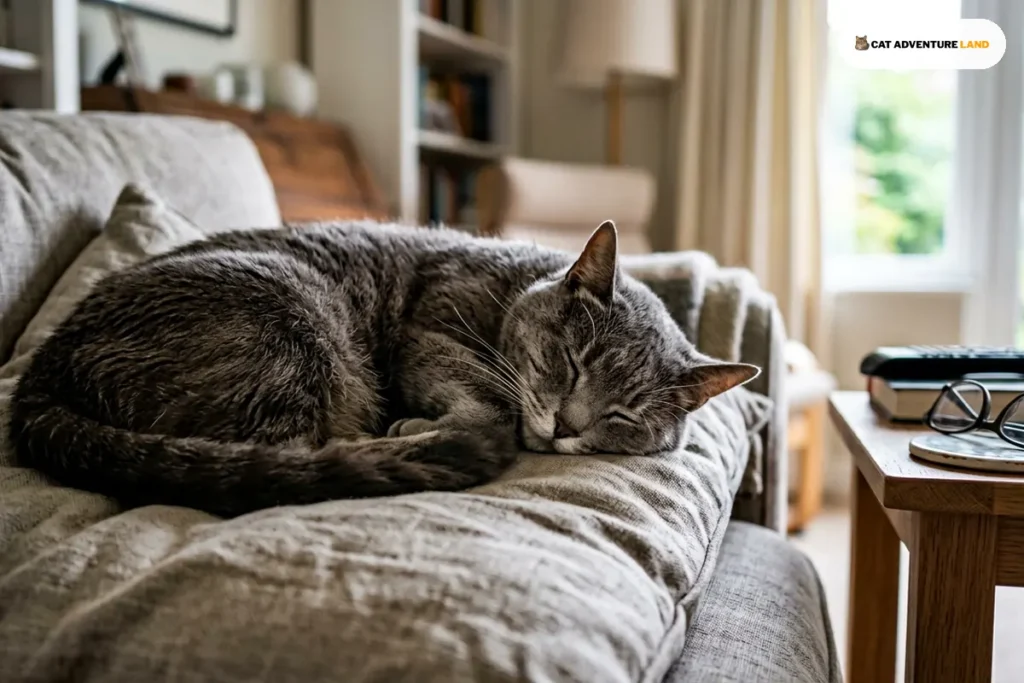
Most of a cat’s day is sleep. Cats rest somewhere between 12 and 16 hours a day, so a nine hour absence overlaps neatly with the average nap schedule. For a healthy adult, a workday alone is not a welfare problem as long as the basics are covered.
Veterinary guidance from PetMD treats 8 to 12 hours as the standard comfortable window for healthy adults and suggests arranging a pet sitter once you pass 24 hours. The UK’s Cats Protection takes a more cautious line, recommending around 12 hours as a maximum for regular absences and treating a single night as an occasional exception rather than a routine.
Why the difference? Guidance shifts depending on what “alone” means. Twelve hours alone can describe nobody home during a long work shift, or nobody checking in for half a day. For a young, confident, healthy cat the two are equivalent. For a shy senior with early kidney changes, they are not.
Why two days is the ceiling, not the goal
Hunger is rarely the problem. A measured meal before you leave, or an automatic feeder, covers calories for a day or two. The real issues are water, waste and plain bad luck.
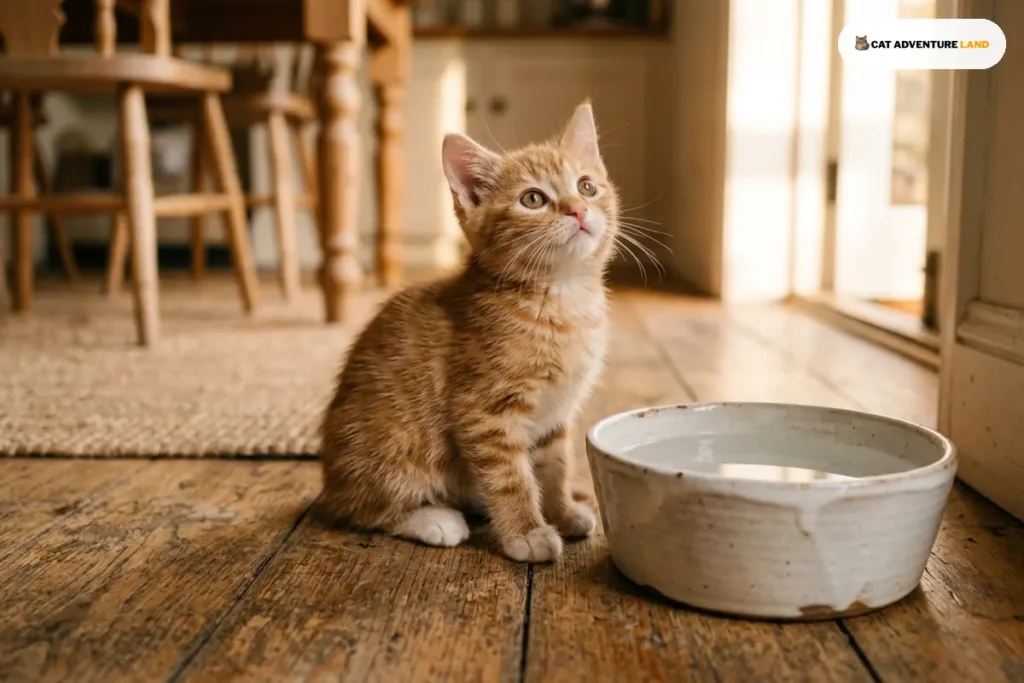
Water first. Bowls get tipped, dust settles in them, and some cats are fussy enough to drink less from a stale bowl. Cats are reluctant drinkers at the best of times, and changes in how much your cat drinks are among the earliest signals that something is wrong. One knocked over bowl can quietly become a dehydration problem.
Then the litter box. Many cats refuse a dirty box and will hold their urine instead. That is uncomfortable at best, and for male cats urinary trouble can turn into a blockage that becomes an emergency inside a single day.
Finally, luck. Doors left ajar, a collar snagged on a bracket, a string toy forgotten under the sofa, a power cut that silences the feeder and the fountain, a heatwave with the air conditioning off. Alone, small problems compound. That is why the 24 to 48 hour range works best as an emergency ceiling, not as a plan for a normal week.
Hours by age, from kitten to senior
Kittens are on a different schedule entirely. Kitten meals come every few hours at first, and a young kitten left alone too long is not just hungry, they are also unsupervised at the exact age when everything goes in the mouth. At the other end, seniors handle solitude reasonably well but hide early illness well too, and cats who live into their late teens deserve closer monitoring as the years add up.
| Life stage | Comfortable alone | Do not exceed | Why |
|---|---|---|---|
| Kitten under 4 months | 2 to 4 hours | 4 hours | Frequent small meals, tiny bladders, and a socialization window that needs people |
| Kitten 4 to 6 months | 4 to 5 hours | 6 hours | Still growing fast and still testing what is safe to chew |
| Adolescent 6 to 12 months | 6 to 8 hours | 8 to 10 hours | Peak energy and curiosity, a risky combination unsupervised |
| Healthy adult 1 to 7 years | 8 to 12 hours | 24 hours, or 48 once in a while with heavy prep | Fully independent, still needs clean water and a clean box |
| Senior 7 years and up | 6 to 8 hours | 12 to 24 hours | Early kidney and thyroid disease hide well, and hydration matters more each year |
| Any cat on medication | One dose interval | Whatever your vet says | A missed dose is not an option, no matter how independent the cat |
These ranges come from veterinary guidance and they overlap on purpose, because cats vary. A confident three year old and a nervous nine year old rescue are different animals. If your cat has any diagnosed condition, ask your vet for a number instead of using a table, and treat medication schedules as the hard limit they are.
Do cats get lonely, or do they sleep through it?
Both, honestly. The “cats are independent” reputation survives because cats sleep through most absences and rarely dramatize loneliness the way dogs do. But independent is not the same as indifferent. Cats bond with people and routines, and some cats genuinely struggle when the routine disappears.
Watch the return, not the departure. A cat who trots to the door, chats, weaves between your legs and then settles down is fine. A cat who has started meowing loudly through the night, avoiding the litter box, overgrooming patches of fur, or eating less while you are away is telling you something, and it deserves a conversation with your vet.
Household shape matters too. A bonded pair often keeps each other company far better than a single indoor cat, although two cats who merely tolerate each other are not automatic insurance. If your cat has always been an only cat, build alone time up gradually rather than assuming they will be fine.
If you are unsure where your cat falls, keep a simple log for two weeks. Note the length of each absence and what you find when you return: how much water went down, the state of the box, the greeting. Patterns show up fast, and they are far more reliable than any generic rule of thumb.
Setting up the house for a day away
A workday absence needs about ten minutes of preparation. Run through this list before you walk out:
- Two heavy water bowls in separate rooms, filled fresh
- Food measured for the hours you will be gone, or portioned in an automatic feeder
- Litter box scooped right before you leave
- A puzzle feeder or a few treats hidden around for entertainment
- Hazard sweep: string, ribbon, hair ties and blind cords out of reach
- Bin lids closed and any toxic plants moved or removed
- Washer and dryer doors shut, windows locked, screens secured
- Thermostat set for the season
- Optional: a pet camera so you can check in from your phone
- Breakaway collar with a current tag, plus a registered microchip, in case of an escape attempt
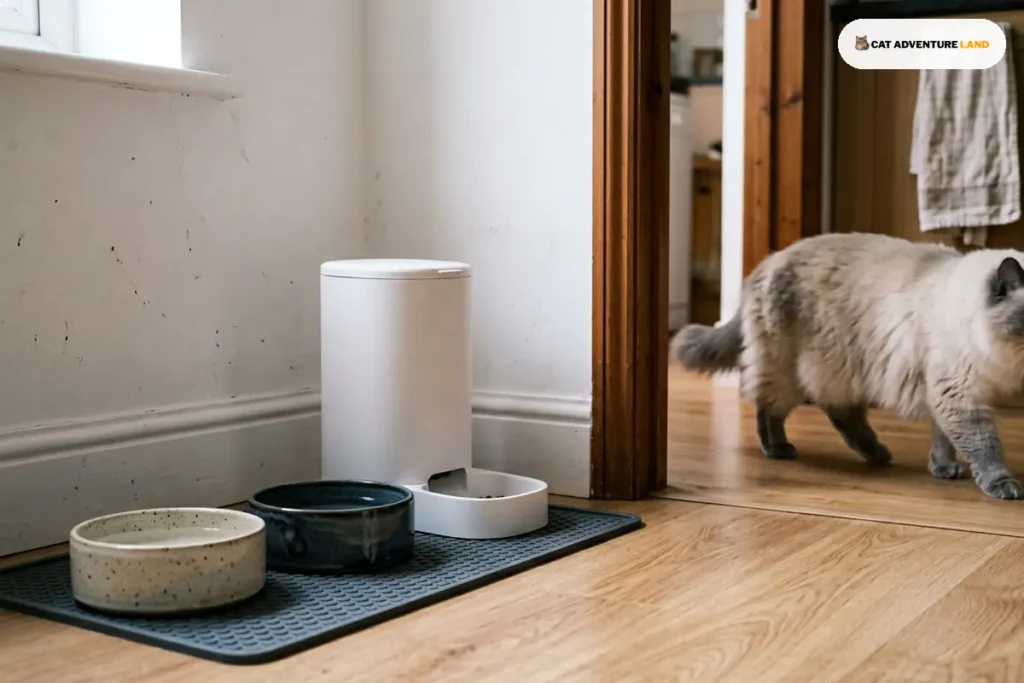
Two notes on the gadgets. Run an automatic feeder on its normal schedule for a full week before you depend on it, so a jam or a battery failure happens while you are still home. And treat a pet camera as reassurance for you, not supervision for the cat: a screen shows you the sofa, not the water bowl in the other room.
Weekend trips, three days and longer
Can you leave a cat alone for 3 days with a full feeder and extra water? No. Food is the easy part. Water, litter and health are not, and past 48 hours every vet aligned source draws the same line: a human needs eyes on the cat at least once a day. For kittens, seniors and cats on medication, twice a day is the safer rhythm.
Your options, compared honestly:
| Care option | What it gives your cat | Best for | Watch out for |
|---|---|---|---|
| Neighbor or friend drops in | A familiar face and a quick check | One or two nights | Ask them to actually see the cat, not just top up the bowls |
| Professional pet sitter | Trained visits, written notes, medical awareness | Weekend to multi week trips, medication cats | Book early for holiday weeks and check references |
| Boarding cattery | Round the clock supervision on site | Complex medical needs, home repairs | Some cats find new surroundings stressful, so visit the facility first |
| Tech layer: feeder, fountain, camera | Automated portions and proof your cat is fine | A safety net on top of any option | A gadget is a backup, never a replacement for a human visit |
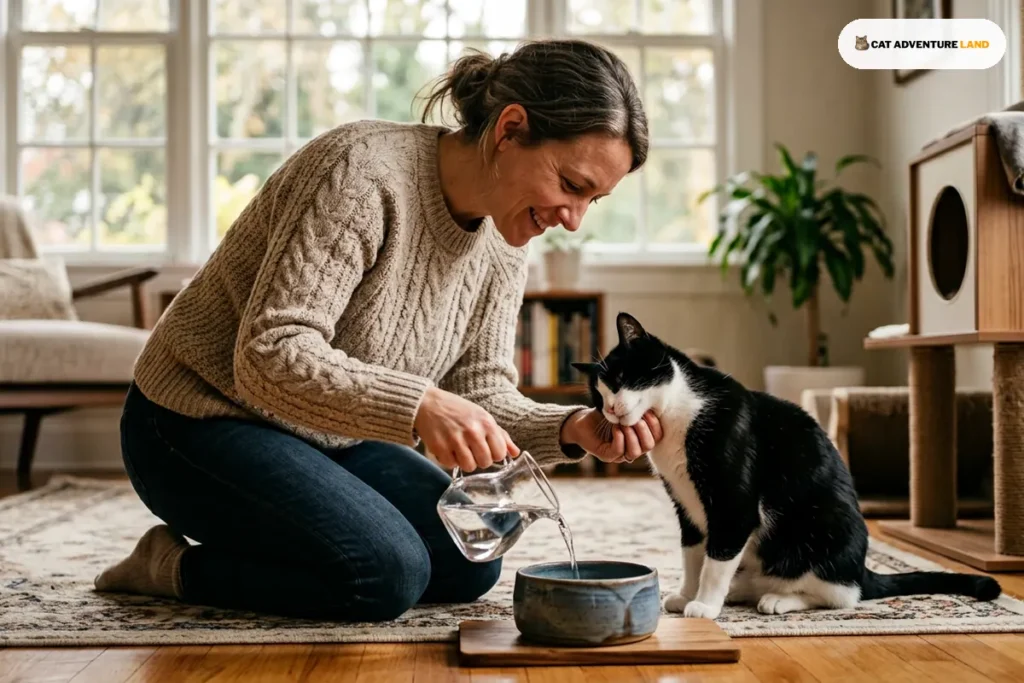
Whatever you choose, leave the caretaker written instructions: feeding amounts and times, the litter routine, your vet clinic’s number, your own contact, a backup neighbor, and where the carrier is kept. Sitters cannot spot a problem they were never briefed to look for.
A good daily visit takes ten to fifteen minutes: fresh water in every bowl, the litter scooped, a proper look at the cat rather than a glance, and a short note to you about appetite and mood. Ask the sitter to check that the cat will eat a treat on the spot, because a cat who refuses food in front of a visitor is often a cat who needs a vet.
Alone time is a skill you can teach
Kittens and newly adopted cats should not start with a full workday. Leave for twenty minutes, then an hour, then an afternoon, and keep both departures and arrivals calm and unremarkable. Drama at the door teaches a cat that doors are dramatic.
Stack the routine in your favor before you go: a hunt style play session with a wand toy, then a small meal. Eat, groom, sleep is the natural sequence after a successful hunt, and a cat who just “hunted” is primed to sleep through your absence. The same positive reinforcement habits that make training work make departures easier too.
And if your cat struggles, never punish the meowing or the accident by the door. Stress behaviors get worse under punishment, not better. Persistent signs of separation stress deserve a proper conversation with your vet or a behaviorist before they harden into habits.
So, how long can you leave a cat alone in practice? The most reliable answer comes from your own cat. Start with a workday, come home, and read the evidence: the water level, the litter box, the greeting at the door. Once you know your own cat, the answer writes itself, one quiet day at a time.

Cat Adventure Land is created for cat lovers who want simple guidance that actually helps. Here you get friendly advice on daily cat care feeding grooming training and overall wellbeing. Every article is written with a focus on real life situations so you can understand your cat better and give them a healthier happier life. Our goal is to make cat care easy for everyone whether you are a new owner or caring for a senior cat.