Kitchen, hallway, bathroom, back to the kitchen. Every room you enter, a quiet shadow pads in behind you and settles to watch. If you keep wondering why your cat follows you everywhere, you are living with one of the most common indoor cat behaviours on record, and in most homes it is a compliment wearing a fur coat.
The short version: you are your cat’s favourite person, main event, and daily schedule combined. The longer version involves bonding, routine, curiosity, hunger, boredom, and occasionally stress. This guide walks through each motive so you can tell devotion from distress at a glance. By the end, you will read your shadow’s reasons the way they read your footsteps: instantly.
Why you have a shadow
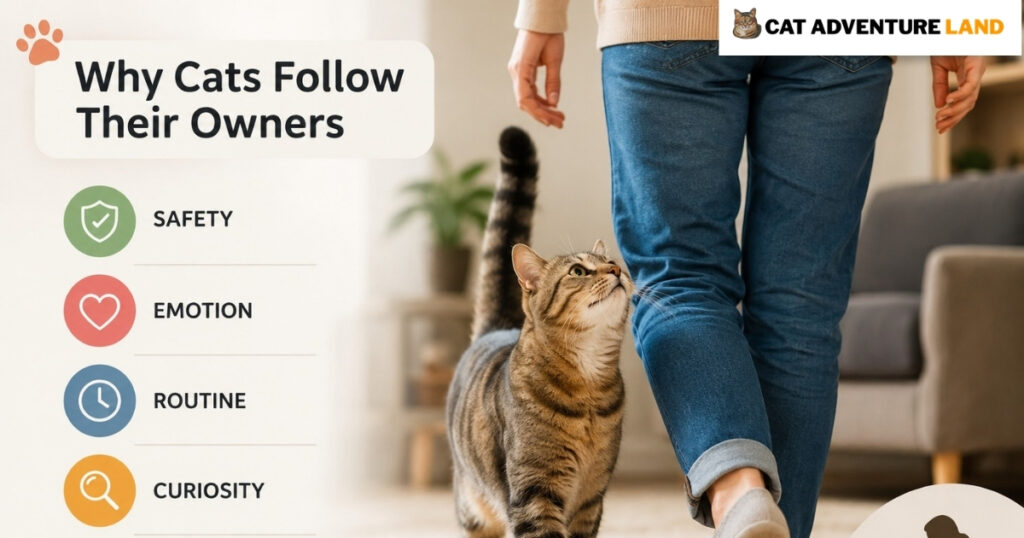
Cats follow for emotional, instinctive, and practical reasons braided together. The emotional strand is companionship: domestic cats bond with humans the way they would with colony mates, and your presence becomes part of their emotional furniture. The practical strand is routine learning. Your cat has memorised feeding times, play sessions, and fuss windows, so every time you stand up, their brain whispers that something good might be starting. Most following is expectation, not confusion. Stand up and watch the calculation happen in real time: ears up, body oriented, a full second of assessment before they commit to trailing you. Nine times out of ten, they commit.
| Reason | Explanation |
| Safety | Feeling secure near their owner |
| Emotion | Affection and bonding |
| Routine | Depending on daily patterns |
| Curiosity | Investigating every move |
| Comfort | Simply enjoying your presence |
Sometimes no motive deeper than company exists. My own cat has supervised thousands of dishwasher unloadings with total focus, asking for nothing, just maintaining closeness. That is the baseline to compare everything else against: calm, content shadowing.
Yes, this is completely normal
Owners even have a nickname for it: the velcro cat, glued to your side from breakfast to bedtime. It shows most in indoor cats, who rely on humans for nearly all stimulation and comfort. Context is the whole diagnostic. Calm, consistent following means trust. Following that appears suddenly, intensifies sharply, or comes with vocalising and restlessness means something changed and your cat is unsettled about it. Learn that distinction and you will rarely need to worry. A good test is the closed door experiment. A secure cat waits or wanders off to nap. A distressed cat cries, paws, or panics within minutes.
Signs your shadow runs on love
An attached cat advertises it constantly. They trail you into every room, park nearby while you work, and sleep touching you or your pillow. Watch for the soft signals too: slow blinks aimed at you, gentle chirps and meows, and a habit of keeping you in eyesight even across the house. A strongly bonded cat typically waits outside closed doors, follows through the dullest chores, notices the moment you leave a room, and holds visual contact like you might vanish. None of that is misbehaviour. It is a trust report, delivered daily.
Or maybe they are just hungry or bored
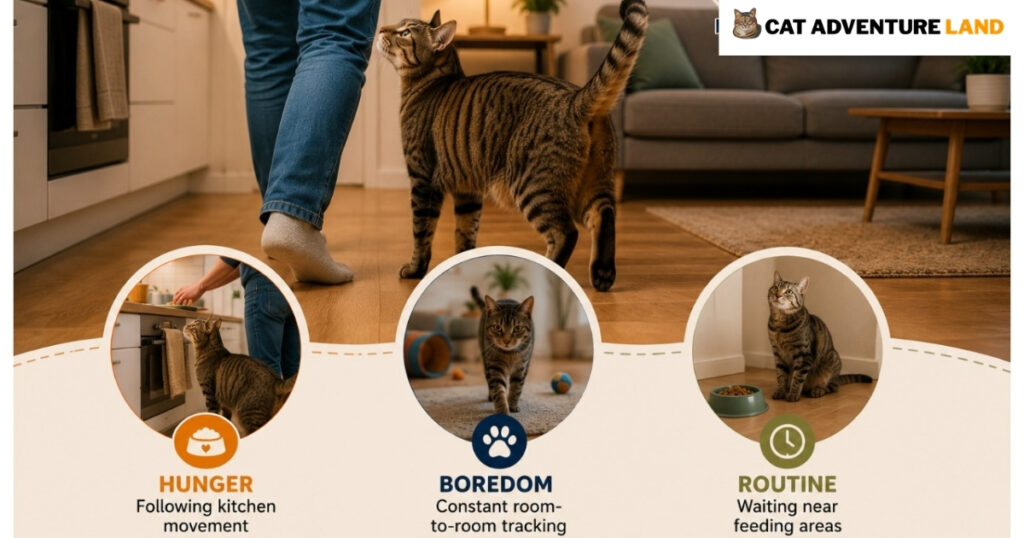
Before crediting devotion, check the practical ledger. A bored indoor cat, especially in a small flat with no climbing, hunting games, or window views, will use you as the entertainment channel. No toys can compete with a moving human. Hunger is the other classic: cats on strict schedules start herding their owners toward the kitchen well before mealtimes, and every step you take reads as a possible drumroll to dinner.
| Trigger | Behaviour |
| Hunger | Shadowing your kitchen trips |
| Boredom | Room to room tracking all day |
| Routine | Camping near feeding spots |
The test is timing, plus one honest look at your cat’s daily life. Count yesterday’s real play sessions and window hours. If the tally is near zero, you have found your answer before reading another word. Shadowing that peaks before meals points at the stomach. Shadowing that never clocks off, paired with restlessness and mischief, points at an understimulated mind. Most homes find a mix of both, layered over genuine affection.
When shadowing means stress
Not all following glows with love. A stressed cat can glue itself to you from insecurity after a house move, a new pet, loud building work, or any routine earthquake. This version often brings separation anxiety with it: distress when you leave the room, extra vocalising, pacing, and hiding spells between the clinging. The needy behaviour here is not attention seeking in the bratty sense. It is a frightened animal borrowing your calm. Behaviour vets writing for PetMD on following behaviour draw the same line between affectionate trailing and anxious dependence.
If the clinginess is new, interrogate the calendar before the cat. Did anything in the environment change recently? Did the daily routine shift? Has a new stress factor appeared, however small it looks to you? Cats register disruptions humans barely notice, and the answer to sudden shadowing usually sits in the last two weeks of household history.
Should you actually worry?
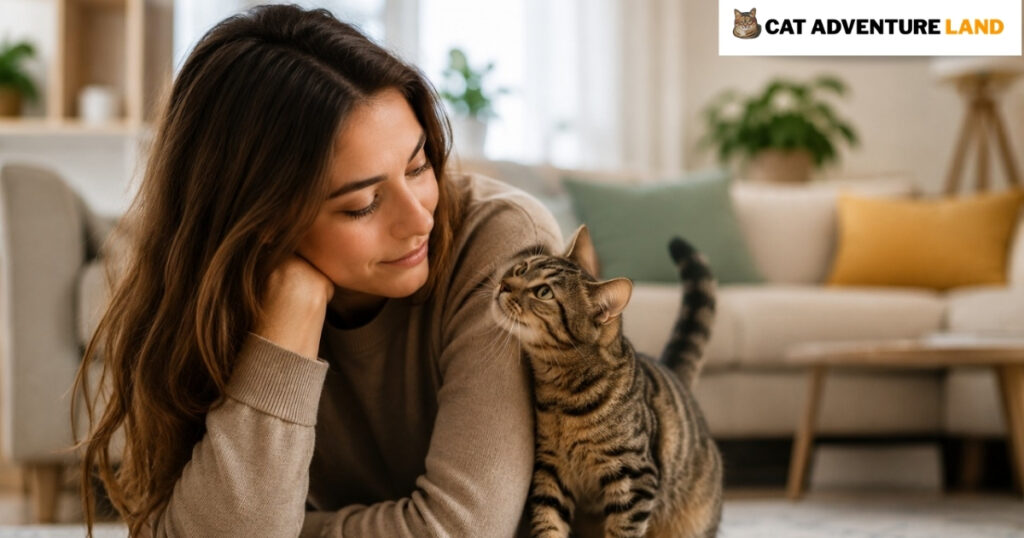
In the overwhelming majority of cases, no. A clingy cat is usually a bonded cat, and steady companionship is part of the package you signed up for when you adopted a social animal. Worry earns its place only at the extremes: dependence that arrives overnight, shadowing so intense the cat cannot eat or rest alone, or clinginess stacked with appetite loss, hiding, aggression, or litter changes. Older cats that suddenly become Velcro deserve extra attention, since the neediness of age has its own chapter in how long cats live and how ageing changes them. For everyone else, love plus routine plus comfort explains nearly all of it.
Teaching confidence without rejecting love

The goal is never less affection. It is a cat secure enough to enjoy affection without depending on it every minute. Start with graduated alone time: a few minutes solo in another room with a puzzle toy, then longer stretches as confidence builds, so absence becomes boring instead of scary. Lock feeding to a fixed clock to deflate kitchen stalking. Fill the day with short independent play sessions, calm praise for relaxed solo behaviour, and a dedicated resting spot that belongs entirely to them. A structured approach speeds everything up, and my 3-month cat training guide lays out exactly that kind of routine. Most owners see a calmer, more balanced shadow within weeks.
FAQs about cats that follow you
Why does my cat follow me to the bathroom?
Because closed doors are suspicious and you are interesting. Bathroom trips combine running water, rustling sounds, your undivided presence, and a door that dares to shut. To a bonded cat, skipping that event is unthinkable.
Why is my cat obsessed with me suddenly?
Sudden obsession almost always traces to change: a new schedule, a house move, a new pet, stress, or occasionally illness. Compare the last fortnight against the behaviour surge and the trigger usually confesses. Persistent, intense clinginess with other symptoms earns a vet visit.
Why does my cat stare at me and follow me?
Staring plus following is curiosity, bonding, and attention seeking in one package. Your cat is watching for cues about what happens next while staying close to their favourite human. The night shift version gets its own breakdown in why cats stare at you while you sleep.
Is it separation anxiety in cats?
Sometimes. True separation anxiety means genuine distress at your absence: crying, destruction, appetite loss, or litter problems when left alone. Calm shadowing while you are home is attachment, not anxiety. The difference is suffering versus companionship.
Why does my cat follow me everywhere at night?
Night amplifies everything: the house goes quiet, instincts wake up, and you become the main event in a dark, boring world. Hunger anticipation before breakfast and safety seeking in the dark add extra pull. Evening play and a late snack settle most midnight shadows.
Your shadow loves you. Mostly.
Room to room, chore to chore, your cat follows because you are home base: safety, schedule, entertainment, and affection in one moving package. That is normal, healthy, and honestly one of the sweetest parts of living with cats.
Keep the routines steady, the play frequent, and the food on schedule, and the shadowing stays in its happy lane. And when the pattern suddenly changes, listen to what the new intensity is telling you. Shadows only shift when something moves the light.

Cat Adventure Land is created for cat lovers who want simple guidance that actually helps. Here you get friendly advice on daily cat care feeding grooming training and overall wellbeing. Every article is written with a focus on real life situations so you can understand your cat better and give them a healthier happier life. Our goal is to make cat care easy for everyone whether you are a new owner or caring for a senior cat.